Plan interactif : 1 lieux répertoriés.
- Lieu sans nom
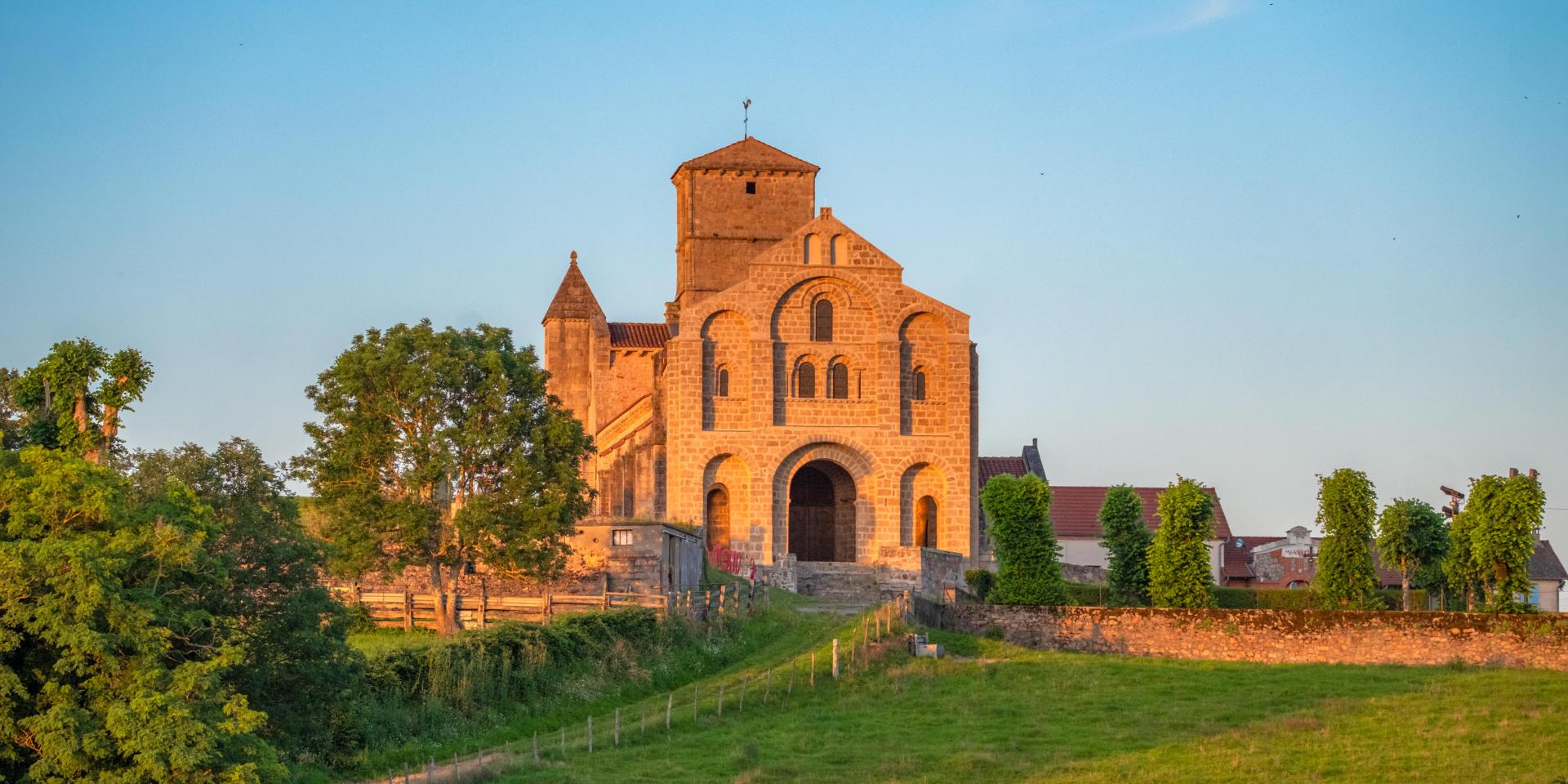
Church of Notre-Dame de Châtel-Montagne
|
Plan interactif : 1 lieux répertoriés.
Châtel-Montagne has occupied a strategic position since antiquity, first as a Gallic oppidum and then as the seat of an important Roman garrison.
The importance of the roads that cross at Châtel, allowed the holding of regular fairs leading to the wealth of the village. This fact is attested by the inscription of Châtel-Montagne on the list of the 30 most important cities and towns of Bourbonnais in the 16th century.

Le village de Châtel-Montagne et son église Notre-Dame
|
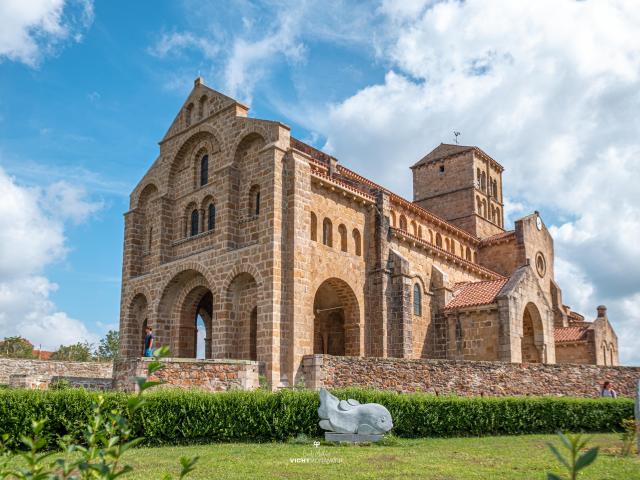
Church of Notre-Dame de Châtel-Montagne
|

Eglise Notre-Dame de Châtel-Montagne
|
Captivating and majestic, Notre-Dame has radiated for ten centuries on the northern end of the Bourbonnaise Mountain. Originally a small church, the monks of Cluny enlarged it from 1095 to 1210 to become the building we know today. Thus, the abbey of Cluny transformed the church of Notre-Dame into a priory until the end of the 15th century. After the priory was abandoned, Notre-Dame became a parish church again, attached to the diocese of Moulins in 1823.
Before that, the church had a few ups and downs during the Revolution: in 1793, the Jacobin municipality cut down the spire of the stone bell tower, burned the statues of the Saints and the Virgin, the religious and civil archives of the village and desecrated the funeral monument. In April 1799, the building was sold and became a warehouse for saltpetre and gunpowder, which saved it from demolition. It was reallocated to worship under the concordat in 1801. In 1840, Notre-Dame was registered in the inventory of Historic Monuments.

Church of Notre-Dame de Châtel-Montagne
|

Church of Notre-Dame de Châtel-Montagne
|
In Châtel-Montagne, bell ringers still take turns to ring the bells. Weighing 390, 416 and 613 kilograms, they require accurate and harmonious movements and a certain strength.

Church of Notre-Dame de Châtel-Montagne
|

Maison du Patrimoine à Châtel-Montagne
|

Maison du Patrimoine à Châtel-Montagne
|
The Vichy Montagne Bourbonnaise tourist office has a Romanesque art space on the history of the church (model, grimoires and video).
Made in 1927 in the Jura on a German model sits on the south aisle toward the sacristy. Its steel and bronze wheels and hardened steel sprockets are driven by two granite counterweights. The heavier 300-kilogram one must be reassembled weekly by hand.
>

Clock of the church Notre-Dame de Châtel-Montagne
|