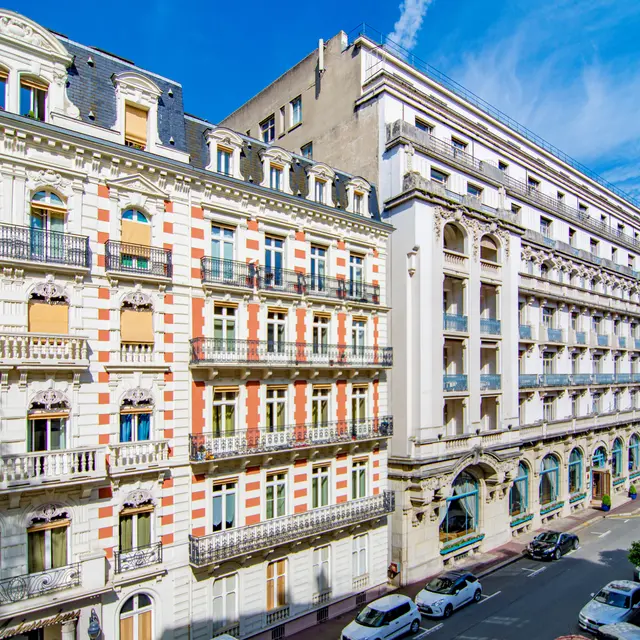
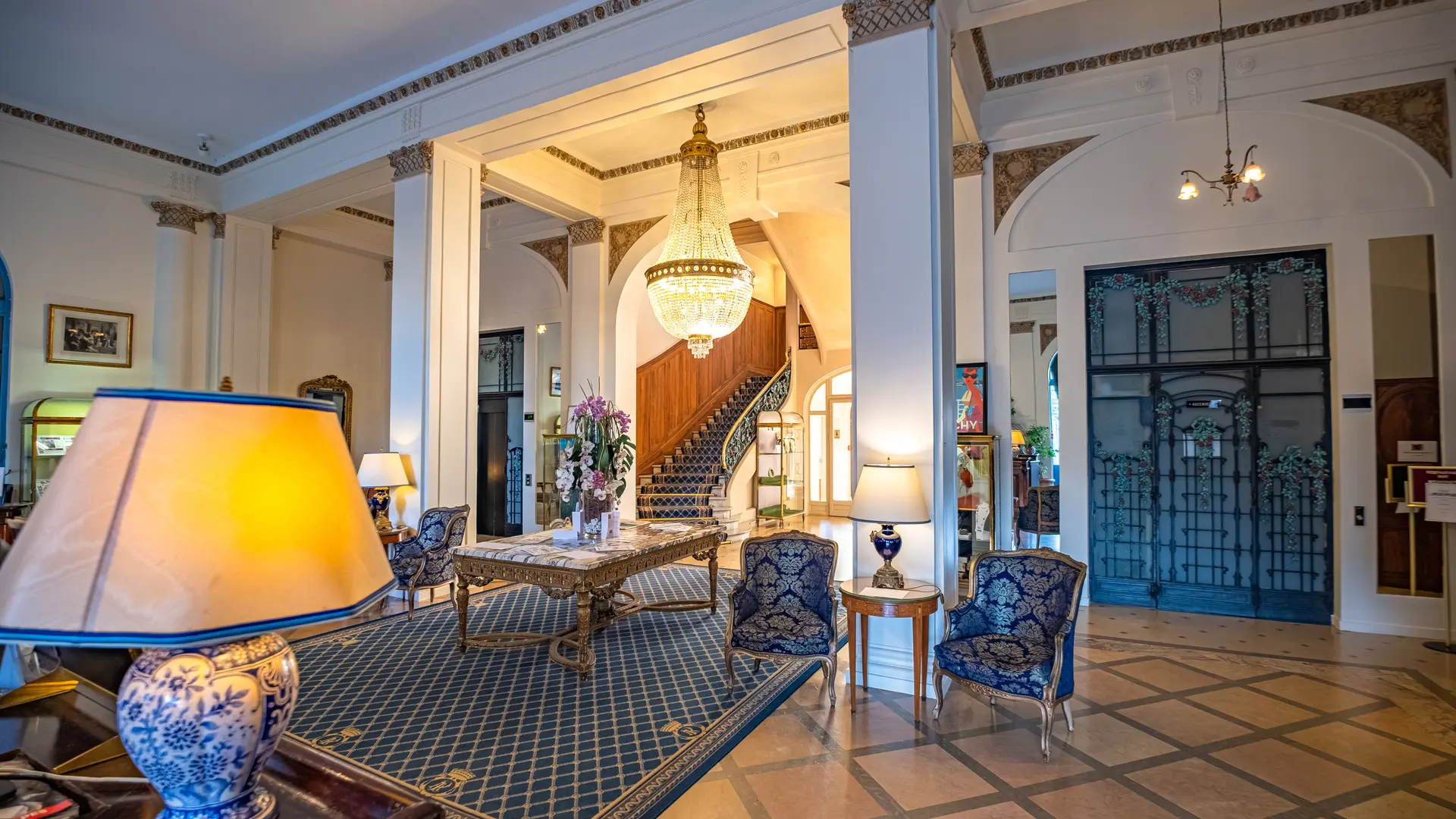
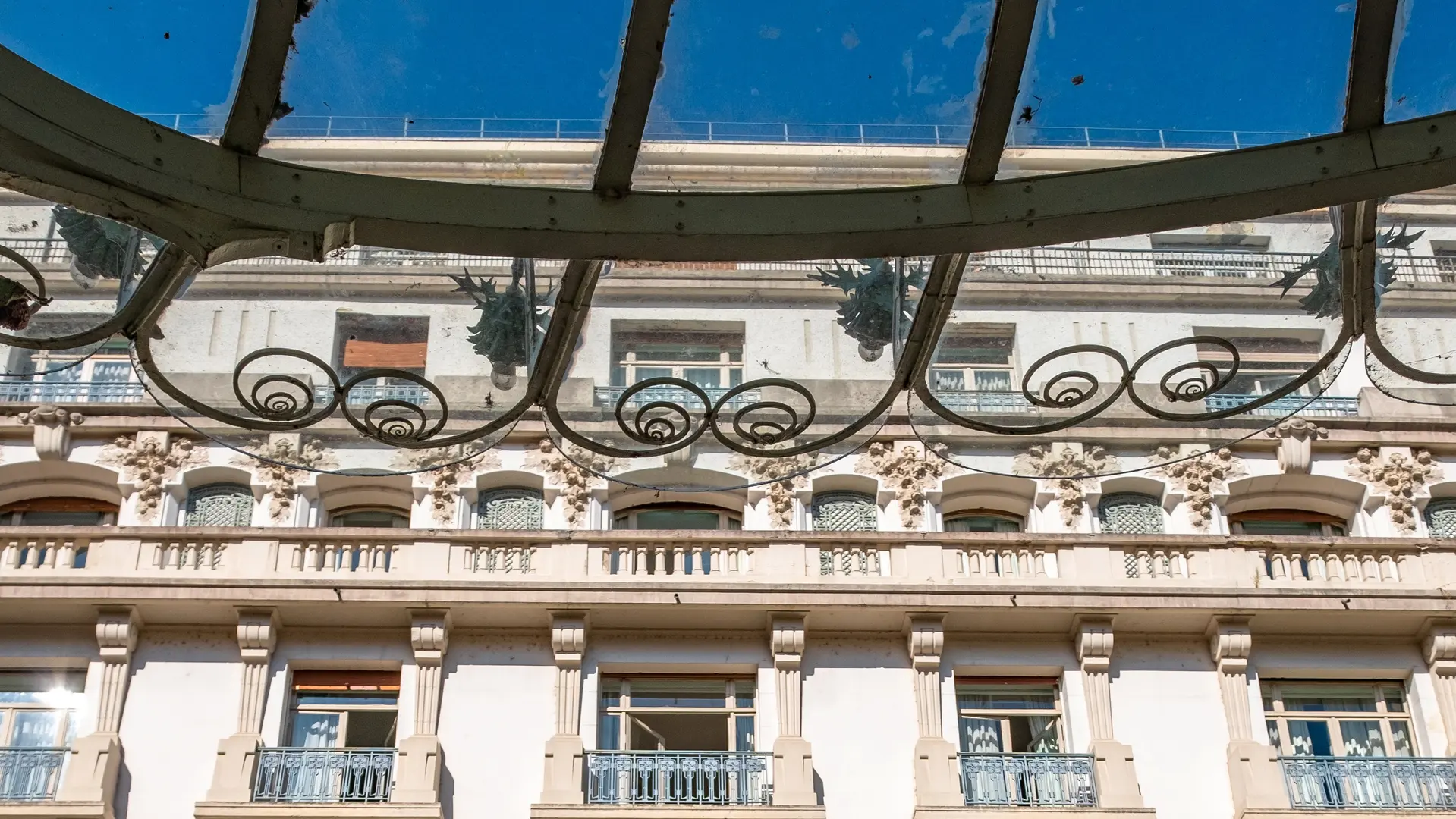
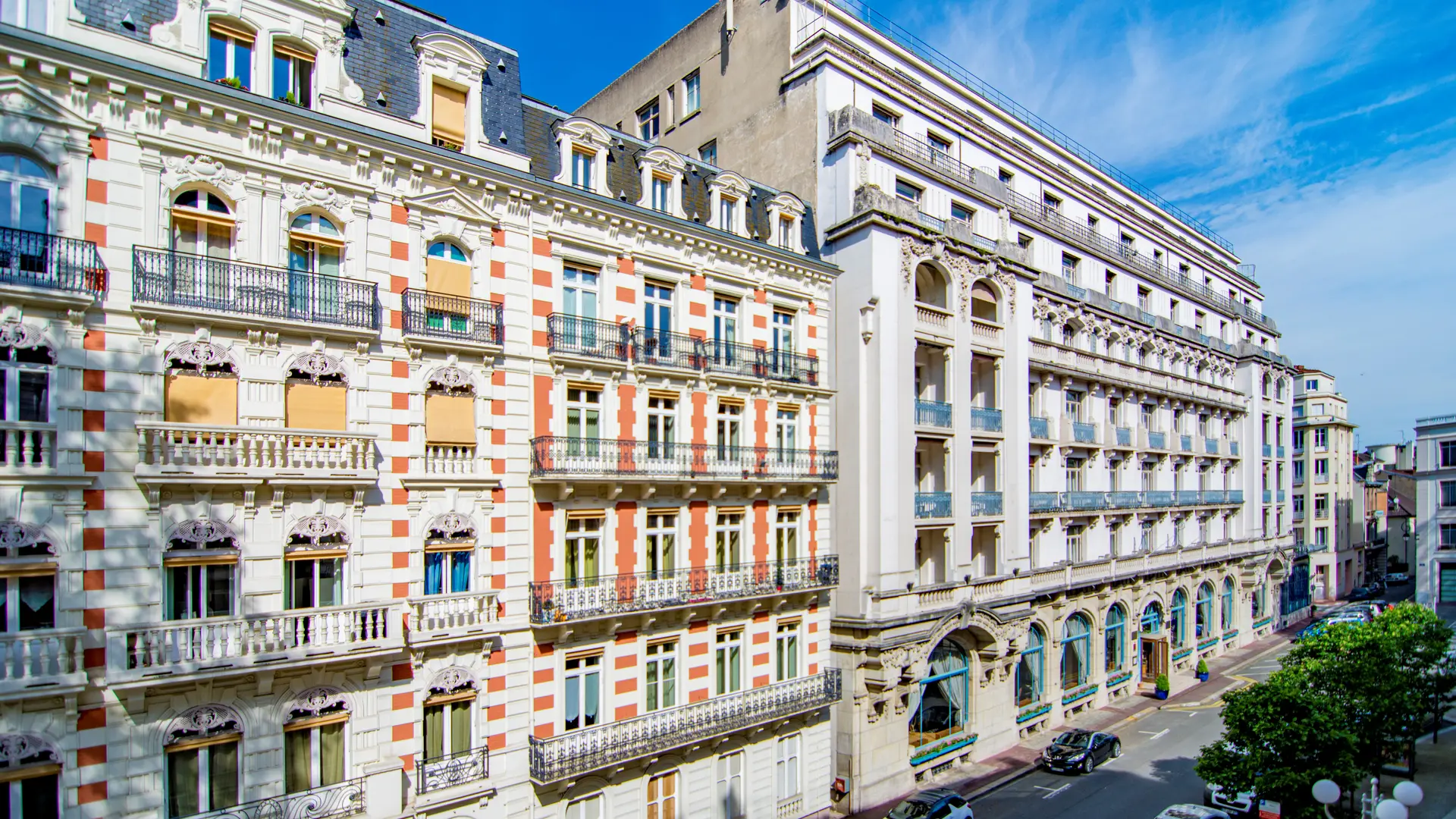
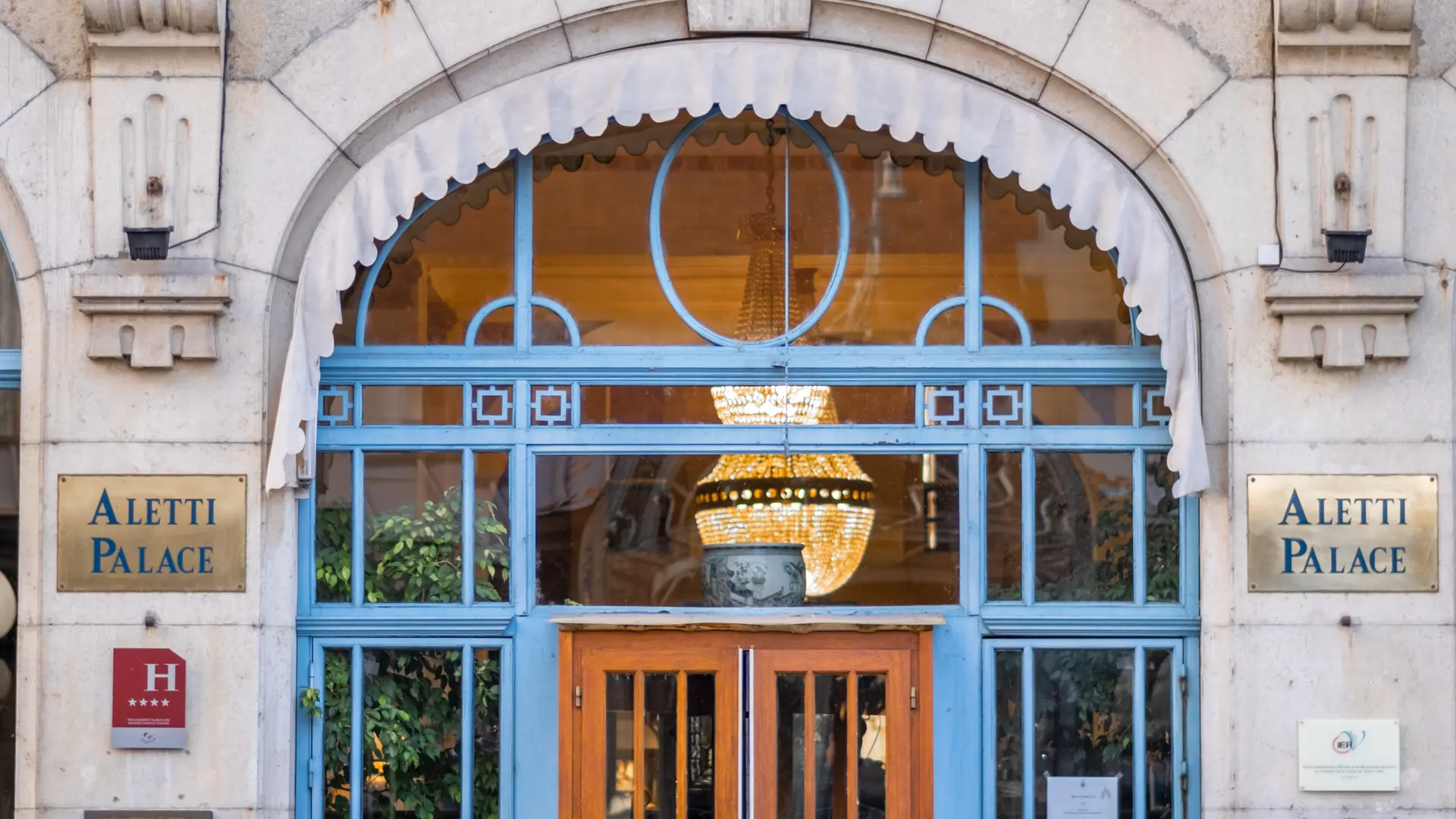
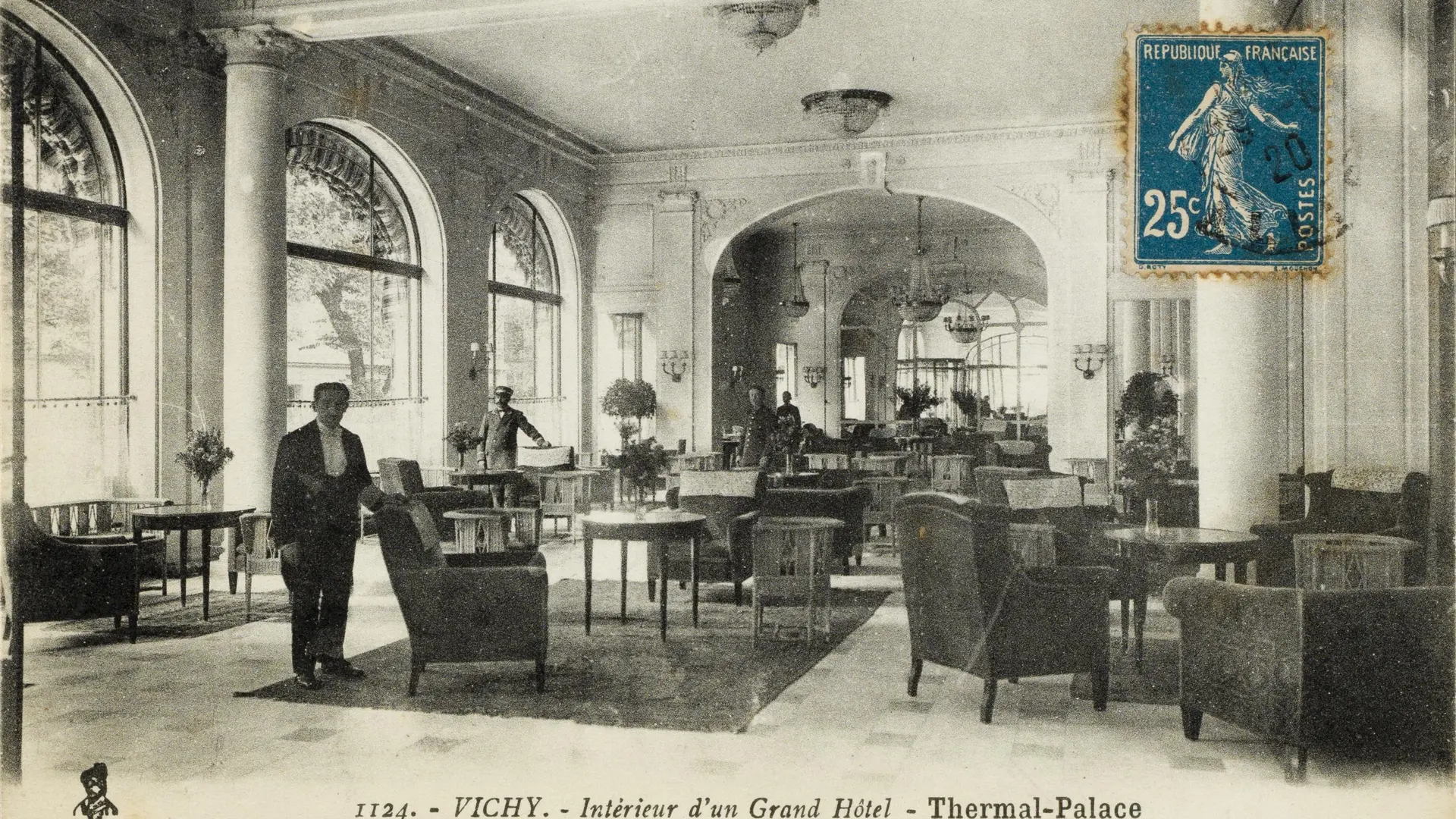
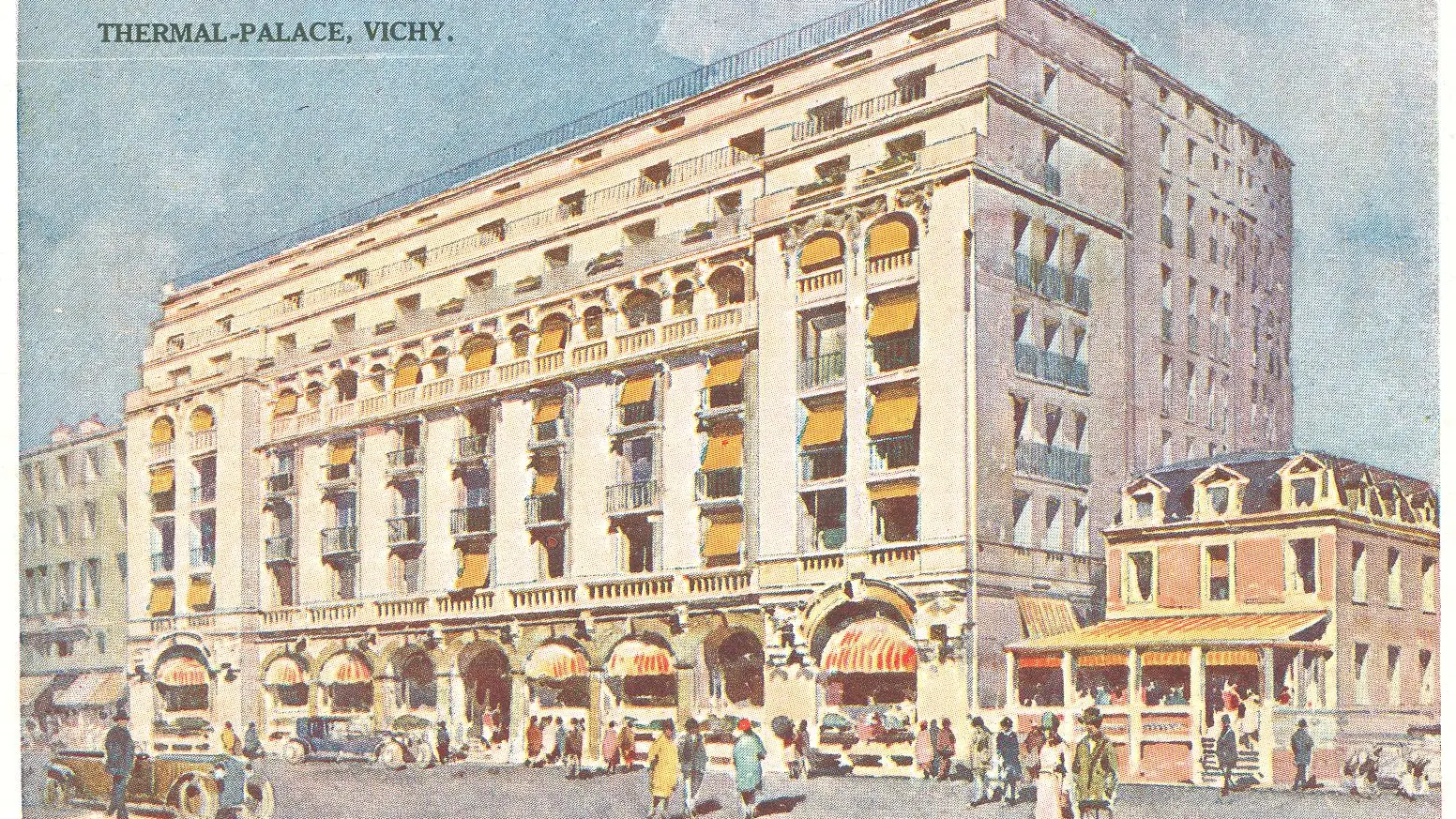
The Thermal Palace, now the Aletti Palace, replaced one of Vichy's oldest hotels, the Hôtel des Thermes, which dated back to before the mid-19th century.
This famous establishment housed Napoleon III's civilian and military entourage, while the Emperor stayed in the adjoining Villa Strauss.
In 1884, M. Revoil, an architect in Nîmes, designed a new dining room in the garden at the rear of the building, the only remaining vestige of the Hôtel des Thermes. In 1908, architect René Moreau was commissioned to rebuild the hotel: he designed a genuine palace with "300 rooms, 300 bathrooms, telephones in every room, 300 separate, ventilated toilets, central heating, electricity, and two elevators." The new hotel also boasted a roof terrace accessible to the public, a popular feature of the period that allowed guests to benefit from fresh air therapy in addition to taking the waters. The hotel was renamed Thermal Palace and became part of the Société des Grands Hôtels de Vichy group, run by Joseph Aletti.
Requisitioned as a military hospital in 1914, the hotel became the headquarters of the French Armed Forces High Command and the French Ministry of Finance. Today, it is the last of Vichy's grand historic palaces to have retained its original purpose.
Location
Thermal Palace - Aletti
Thermal Palace - Aletti, 3 place Joseph Aletti, 03200 Vichy