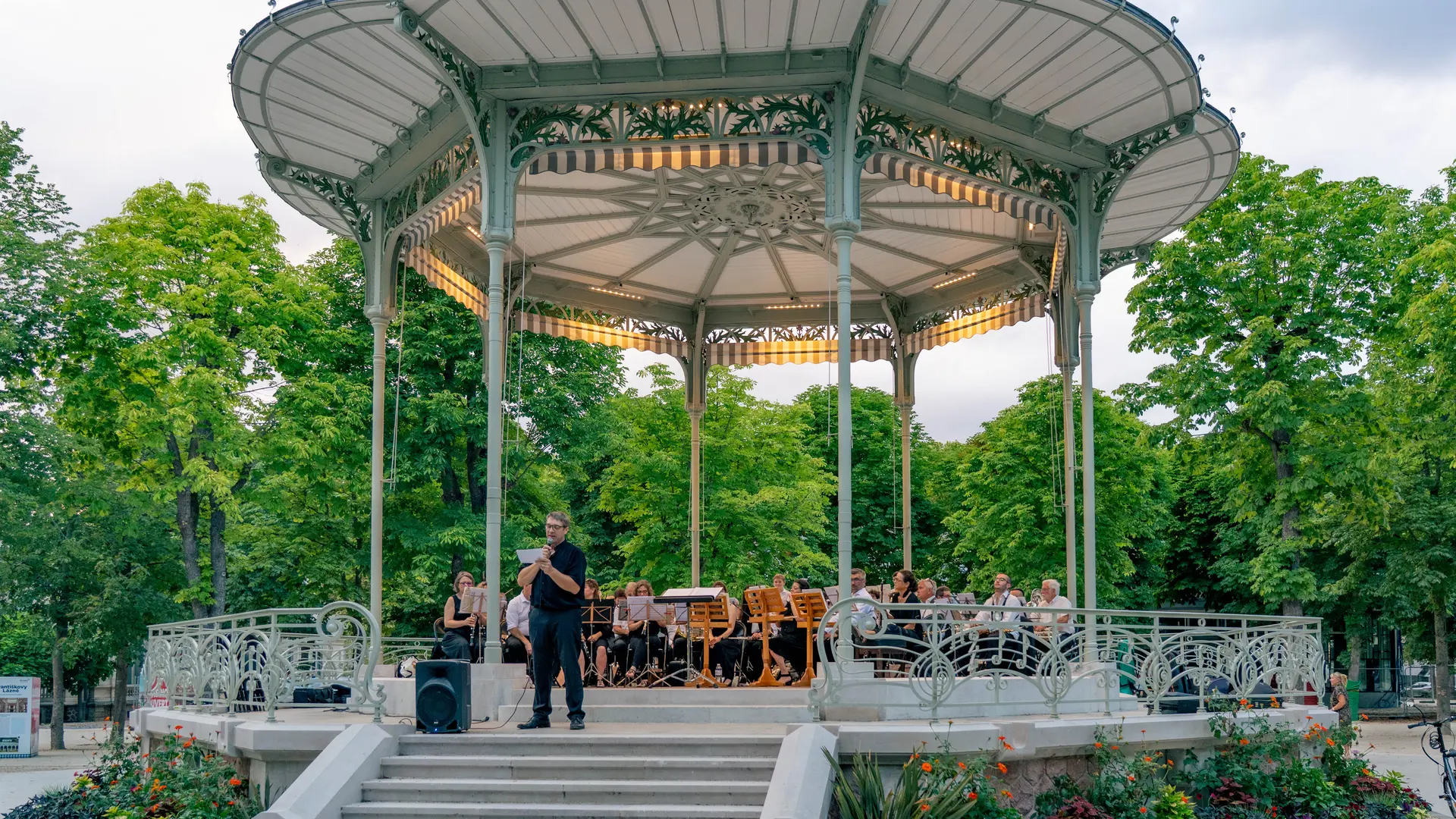
Bandstands are part of the street furniture essential to any spa town, providing both entertainment and a sociable space where people can meet up and relax.
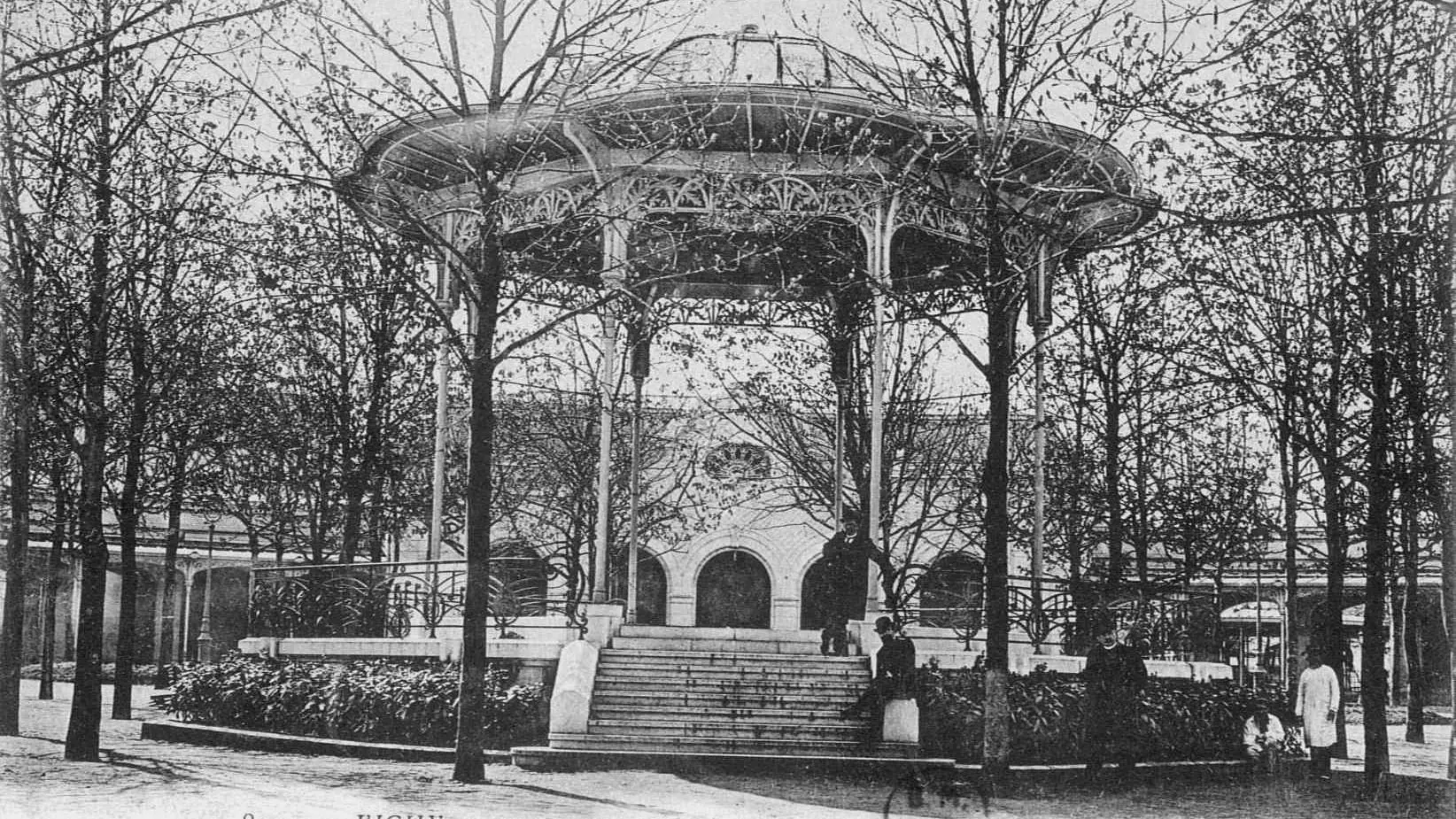
They enliven the waiting period between treatments and water intakes. This bandstand, designed in 1902 by Lucien Woog, replaced the previous one, which had been removed to make way for the opera house. A second bandstand, known as the Kiosque de la Restauration (now relocated to the Parc des Bourins), built in 1874 behind the current Casino, was used primarily for children's dances.
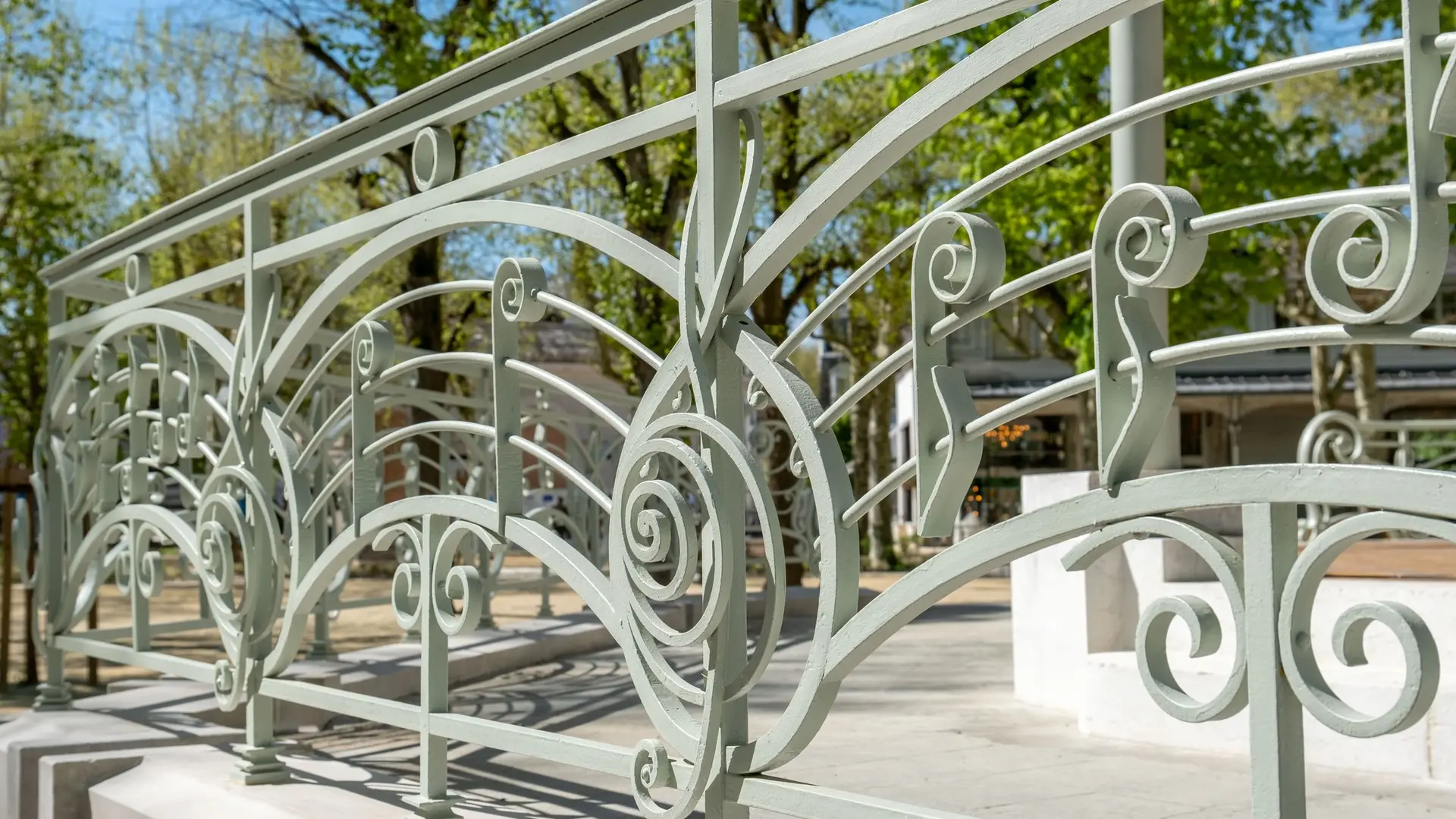
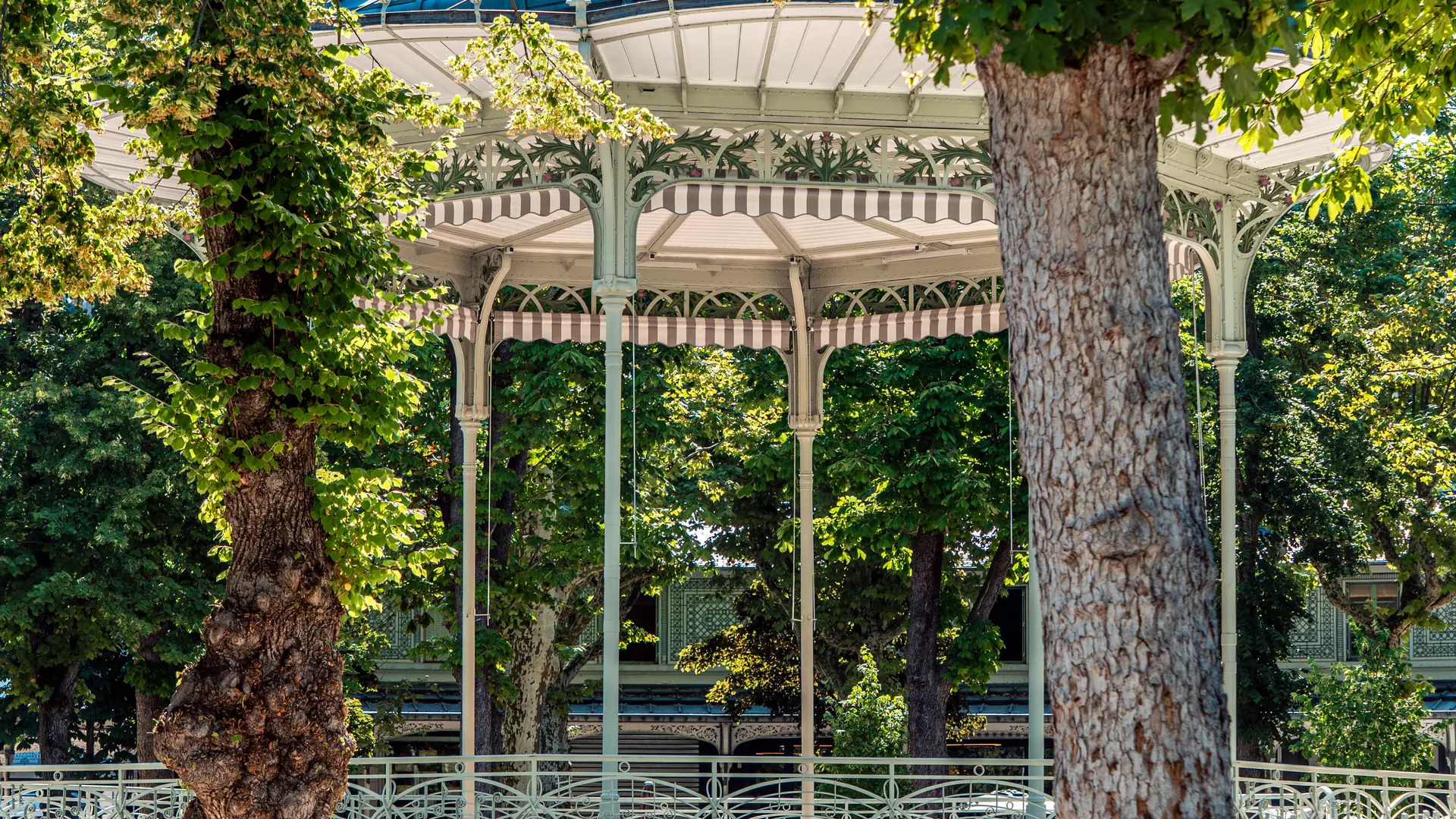
Lucien Woog, a young architect, graduate and teacher at the École Nationale Supérieure des Arts Décoratifs, adopted an Art Nouveau style, to which he added an Oriental touch with a polylobed awning, thistle friezes, and a ceiling with an intricate star design. He commissioned the famous wrought iron craftsman, Émile Robert, to create the decorative railings composed of musical scores on which were inscribed the notes of six traditional children's songs. These featured the opening bars of J’ai du bon tabac, La boulangère a des écus, Au clair de la lune, Frère Jacques, Sur le pont d’Avignon and Nous n’irons plus au bois.
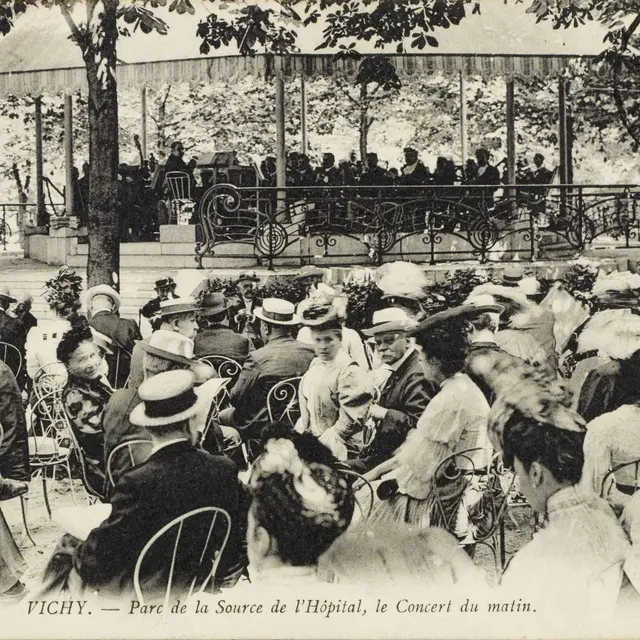
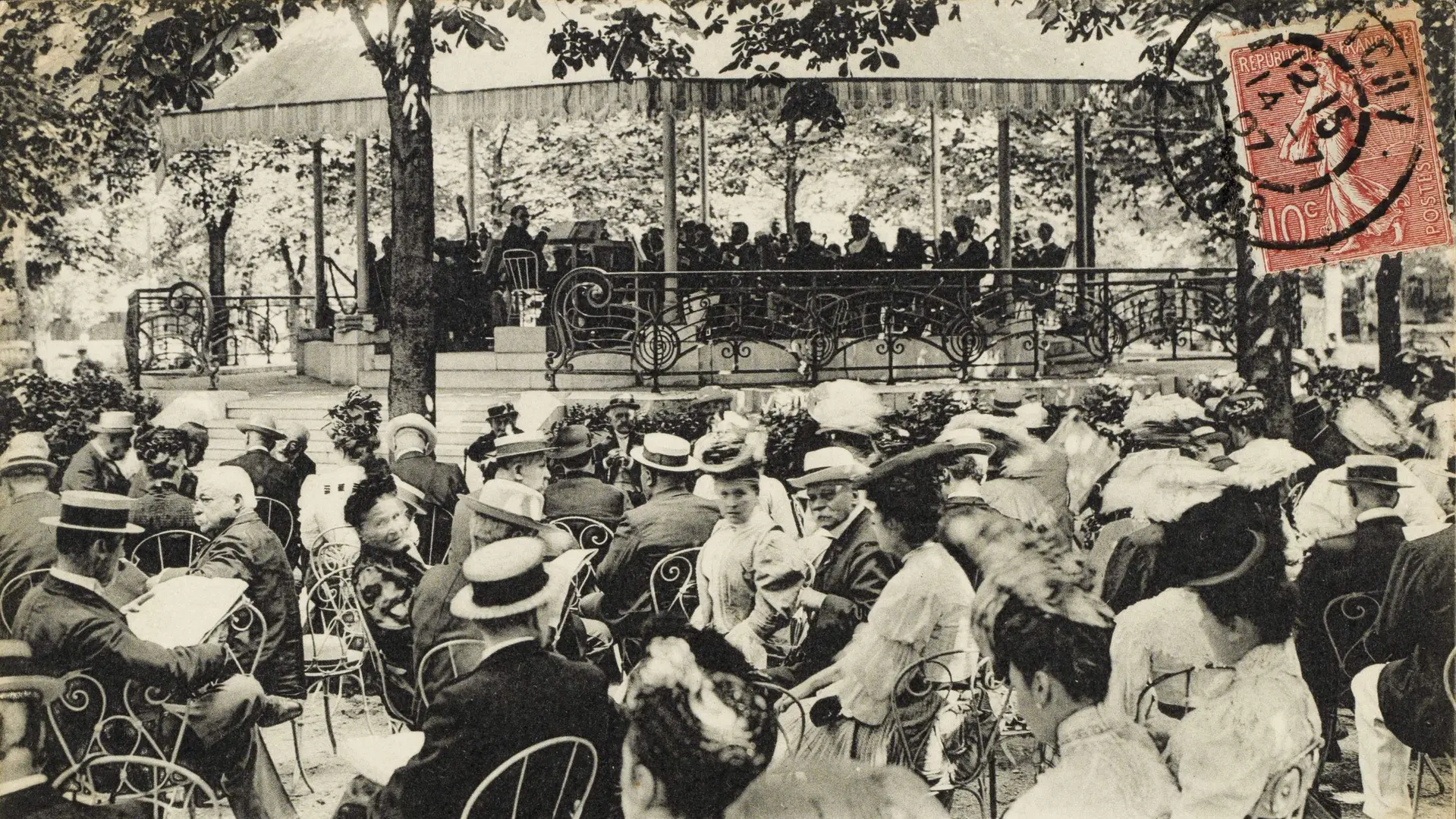
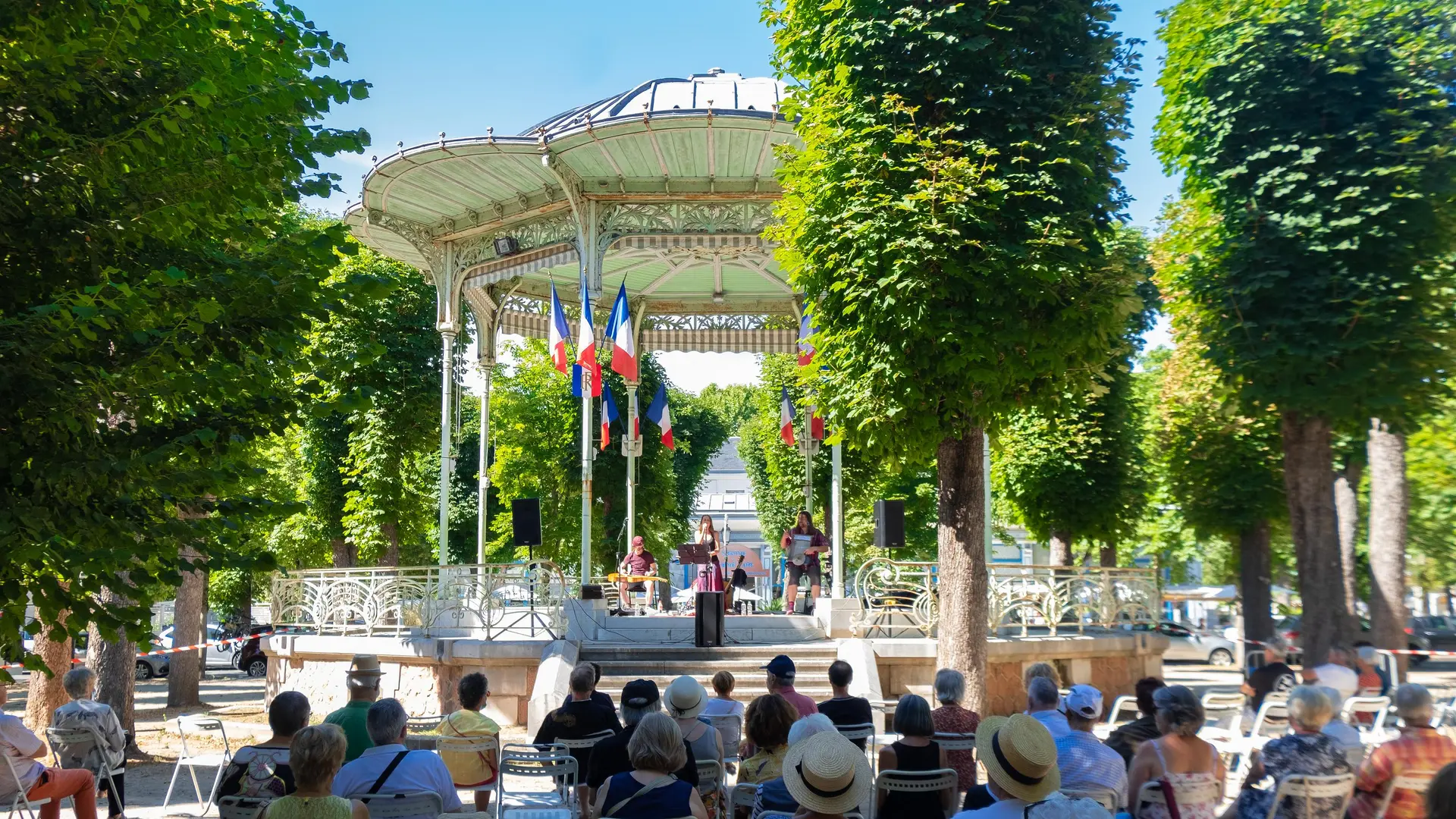
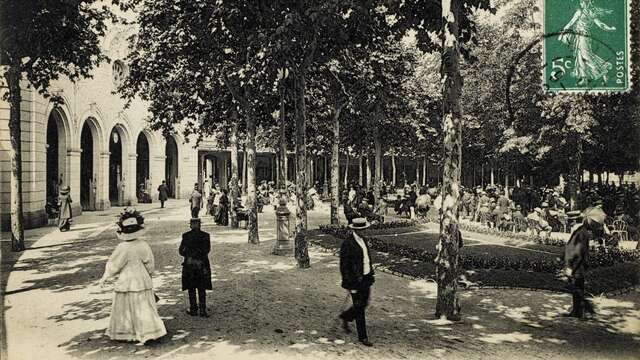
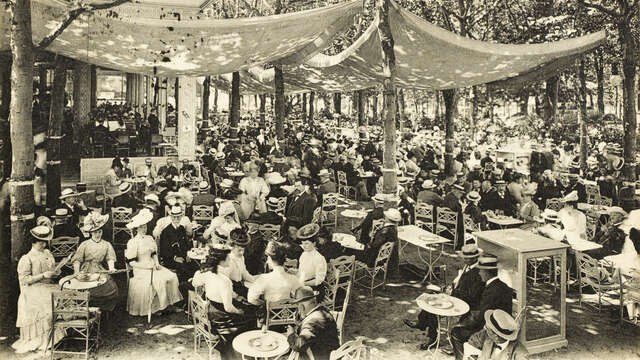
During the Belle Époque, spa visitors rented chairs to attend concerts by members of the Grand Casino orchestra, starting at 8:30 a.m. Even today, the bandstand hosts numerous daytime and evening events during the summer months.