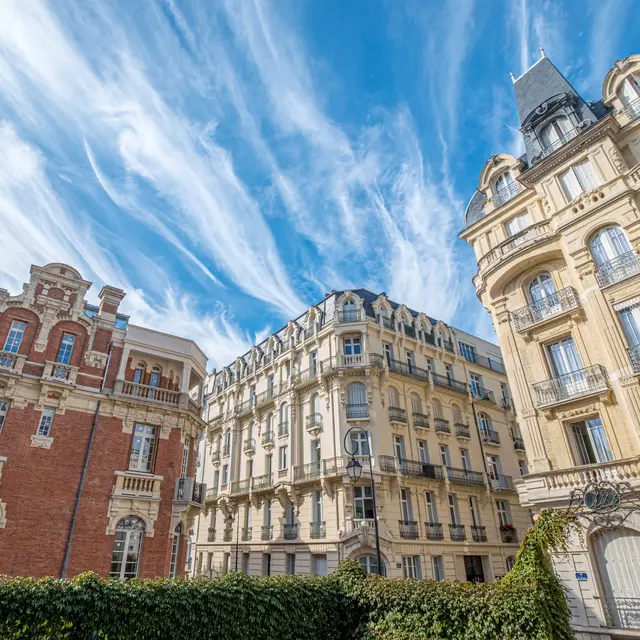
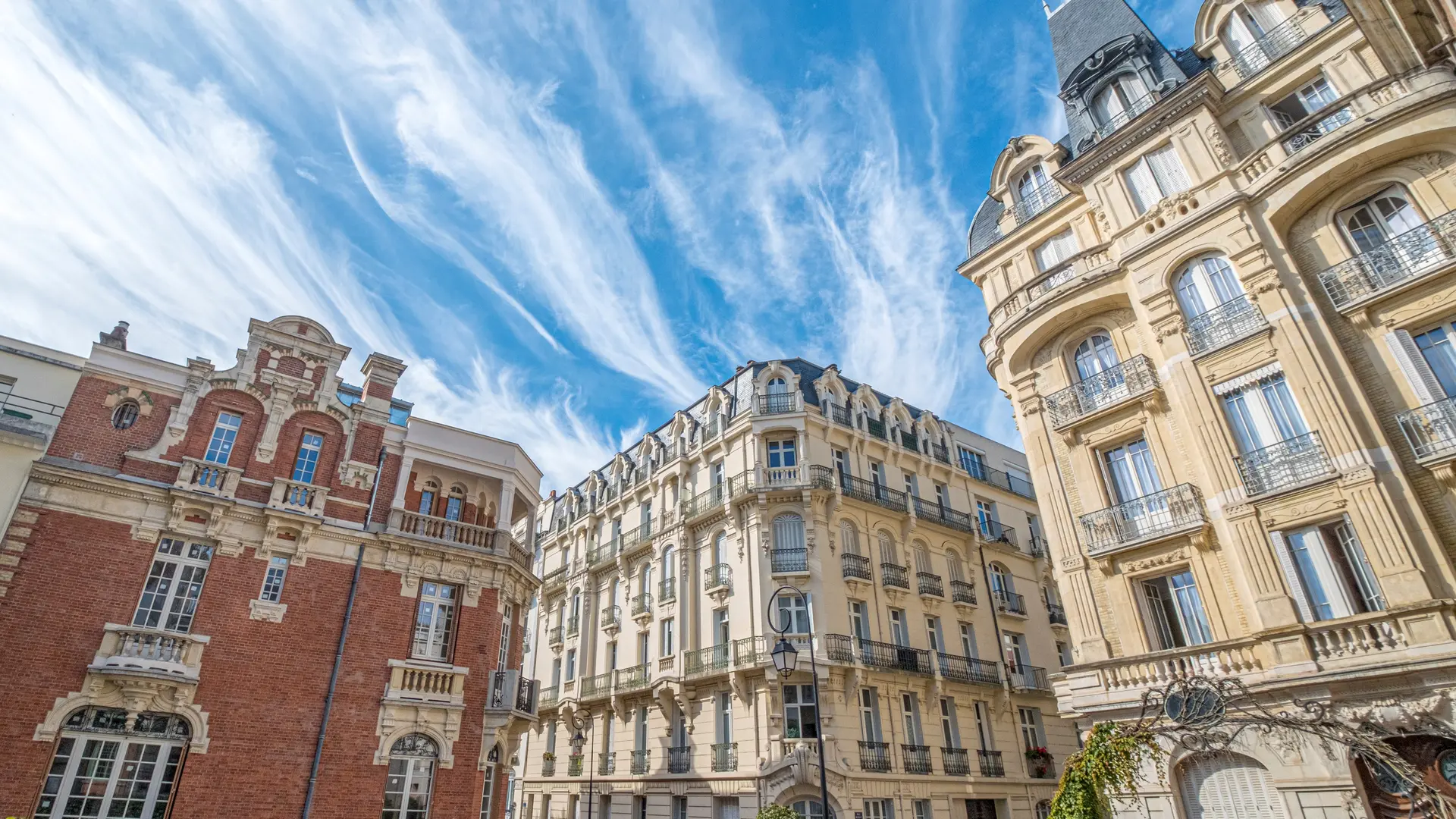
This street illustrates the creativity and audacity of the builders of the Belle Époque.
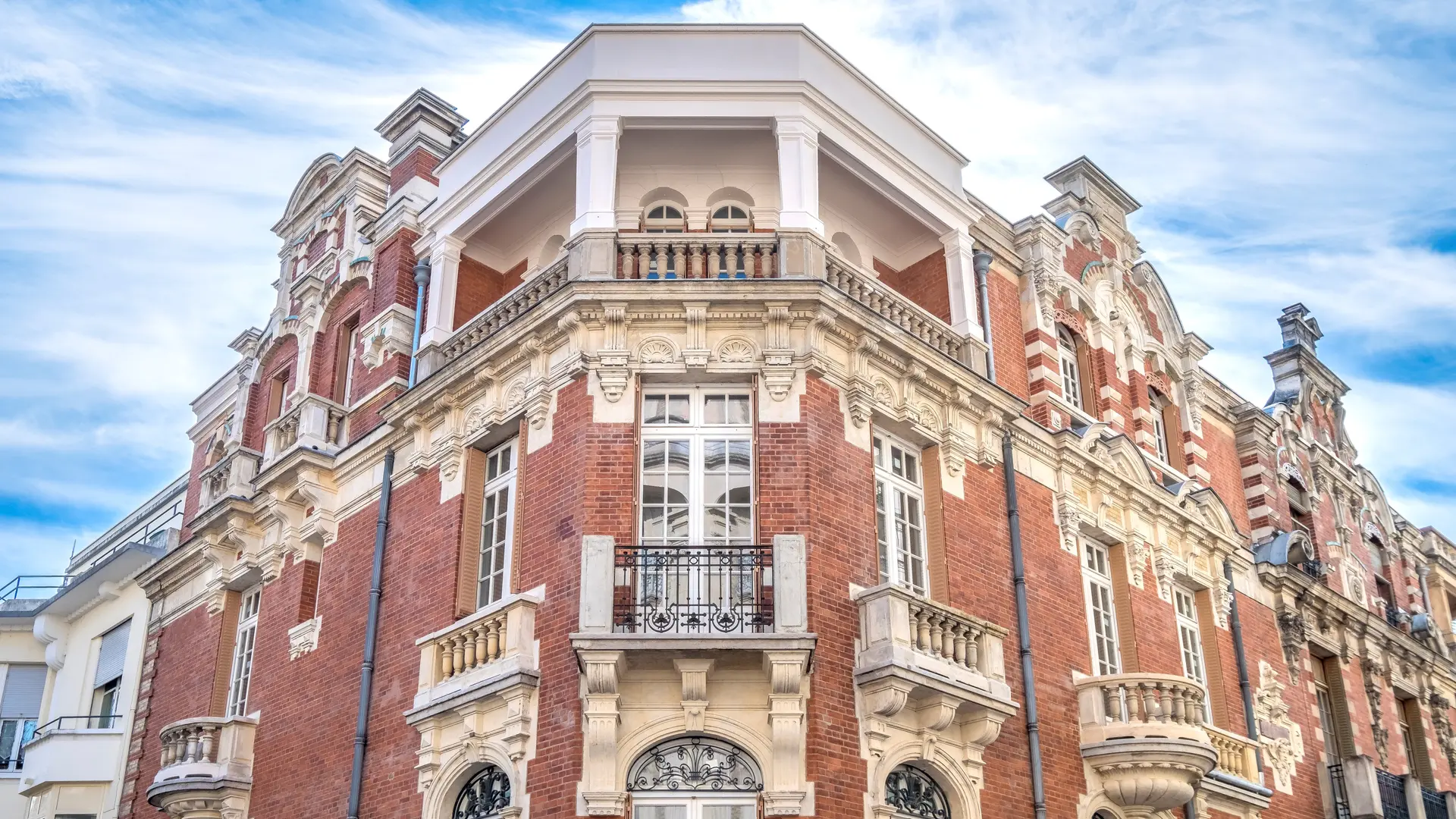
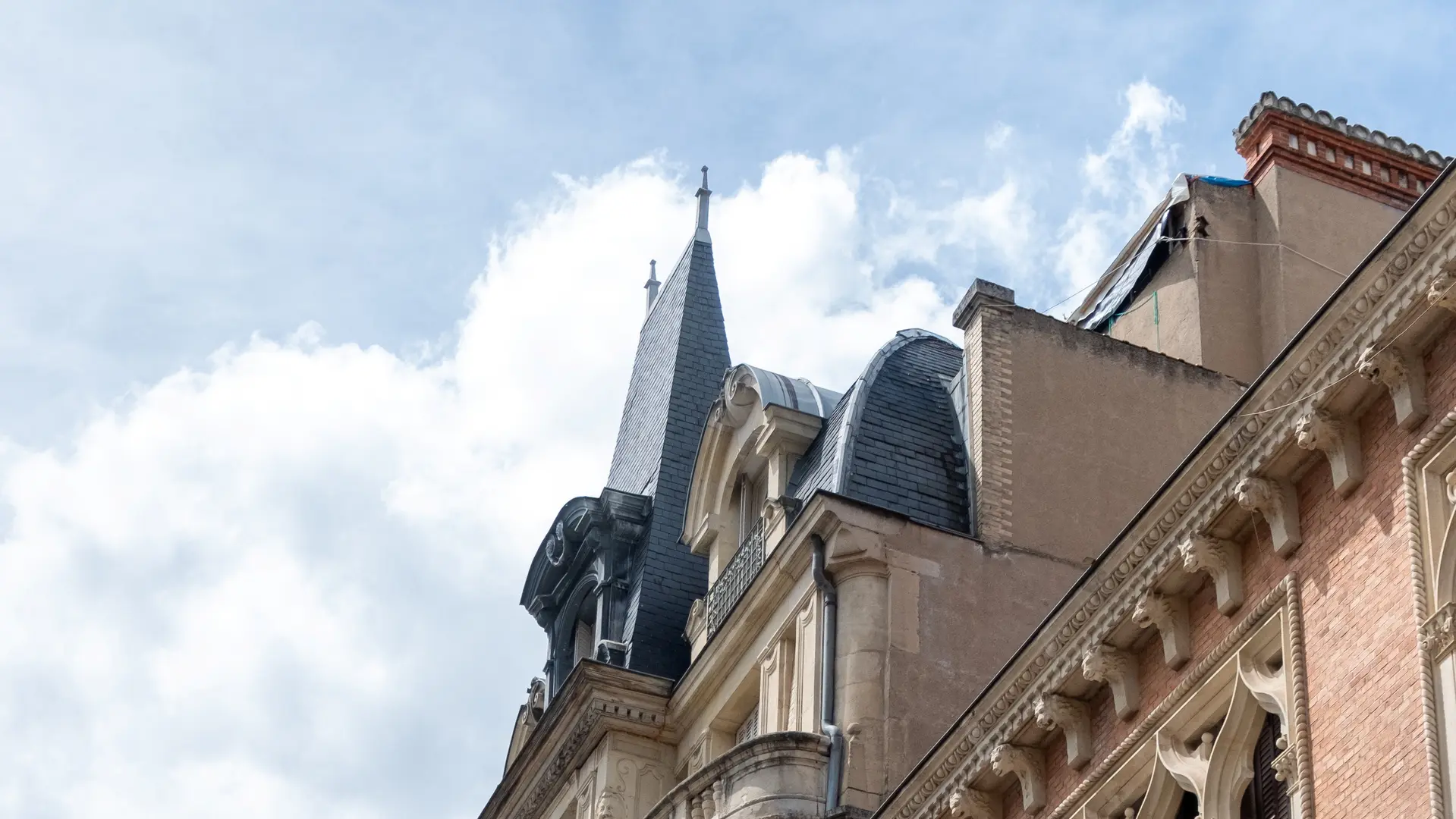
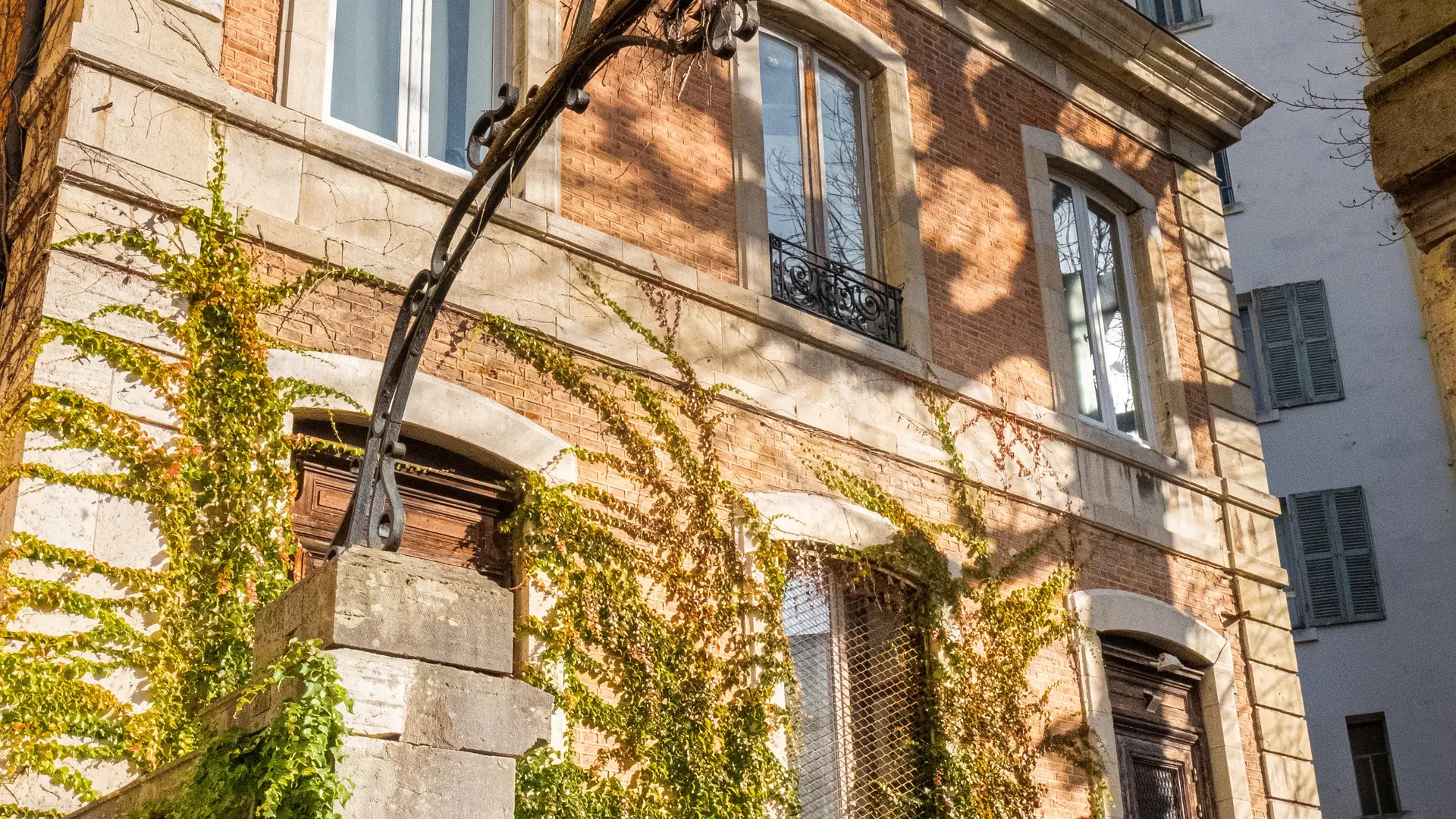
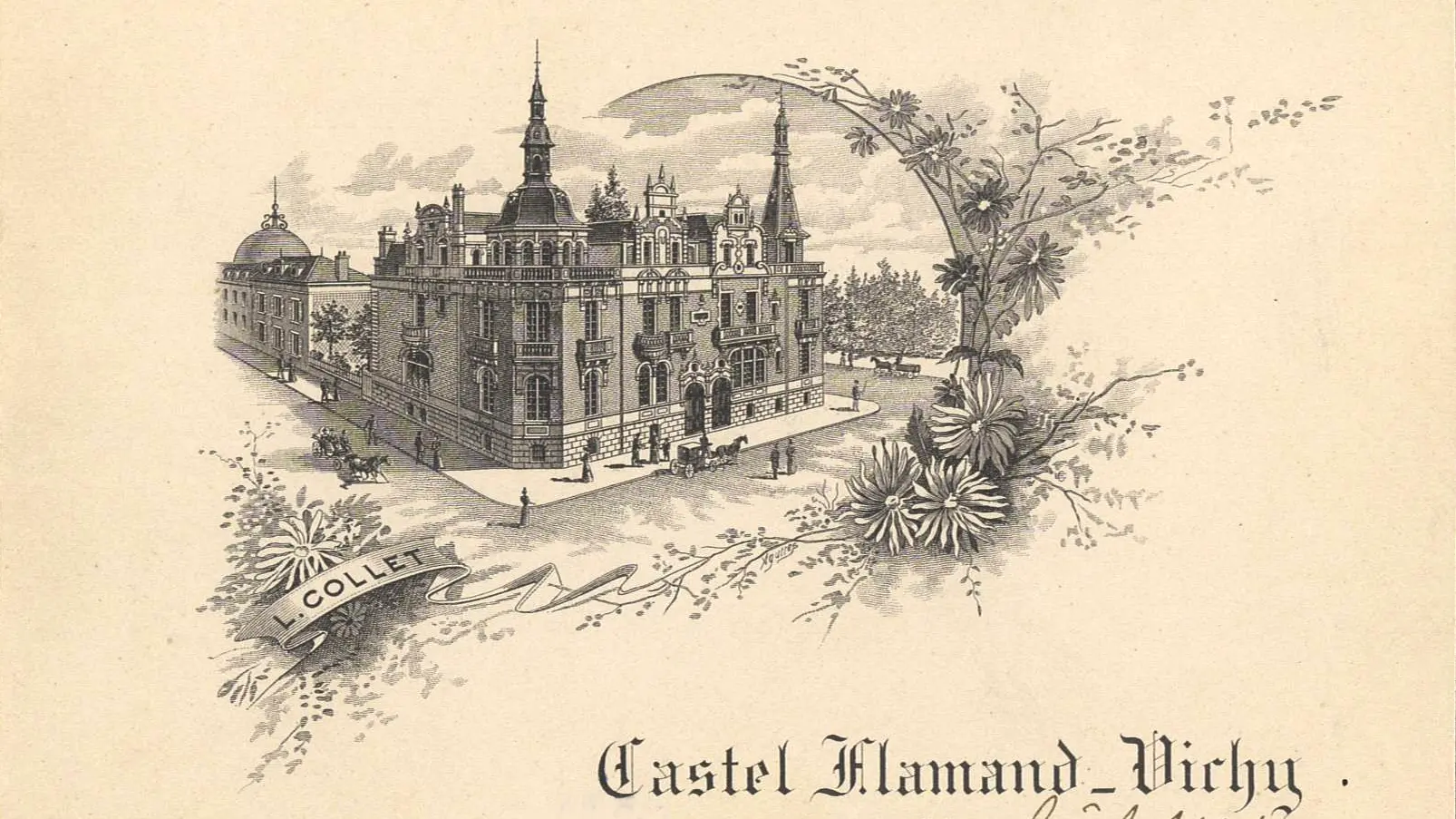
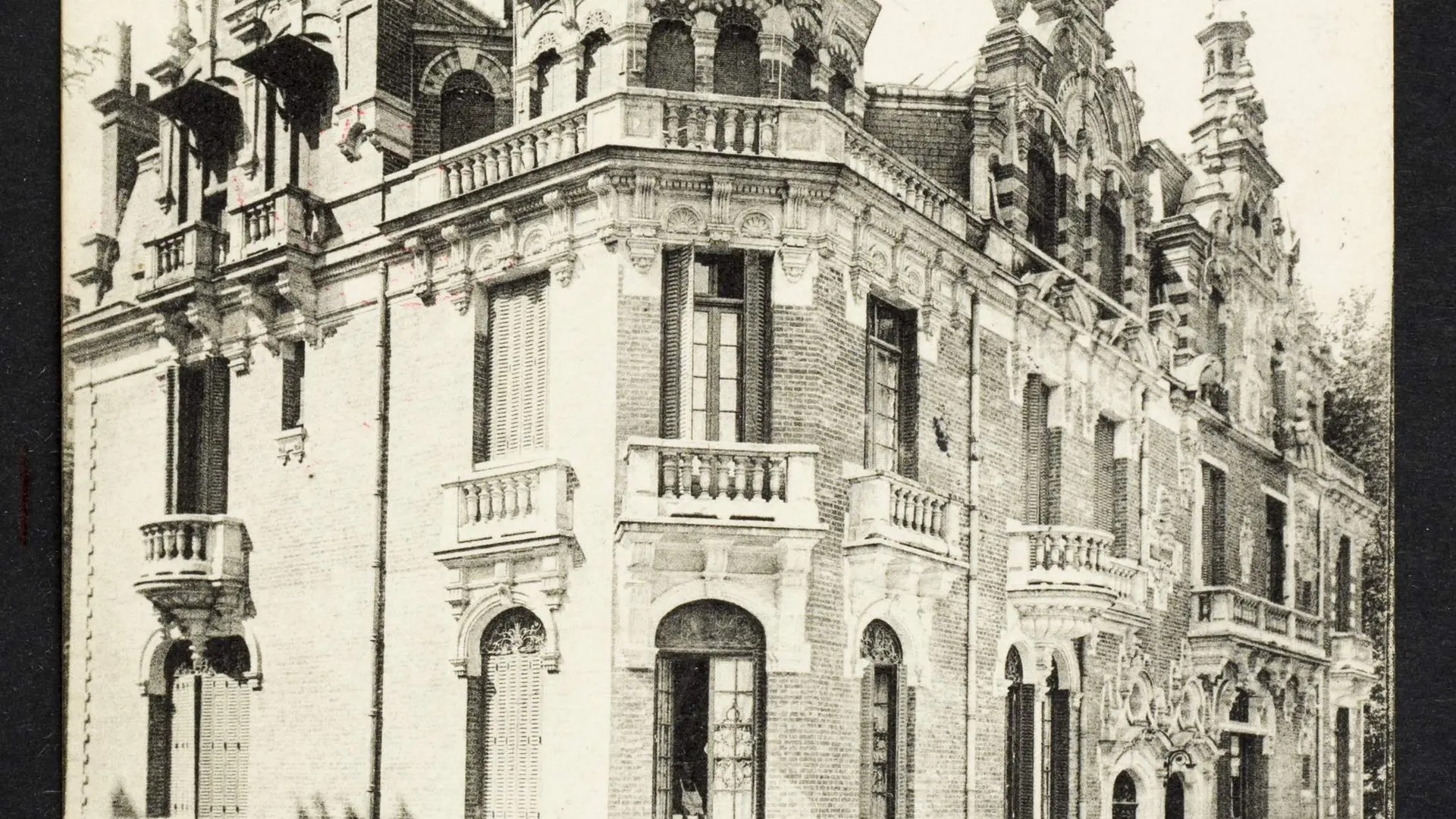
Castel Flamand (1898), N°2 and N°2a, an annex of the Hôtel des Ambassadeurs, was built by Ernest Mizard and used exclusively for holiday rentals. This villa displays all the traditional codes of Flemish architecture: red brick facades with limestone trims, gables facing the street, etc. The original roof was destroyed in a fire in 1933.
Hôtel Lutetia (1912), N°5, was built by Adrien Dacq who, while following a fairly conventional style with pilasters, balusters, and high slate roofs, also introduced references to Art Nouveau with floral motifs curling around banisters and bay windows.
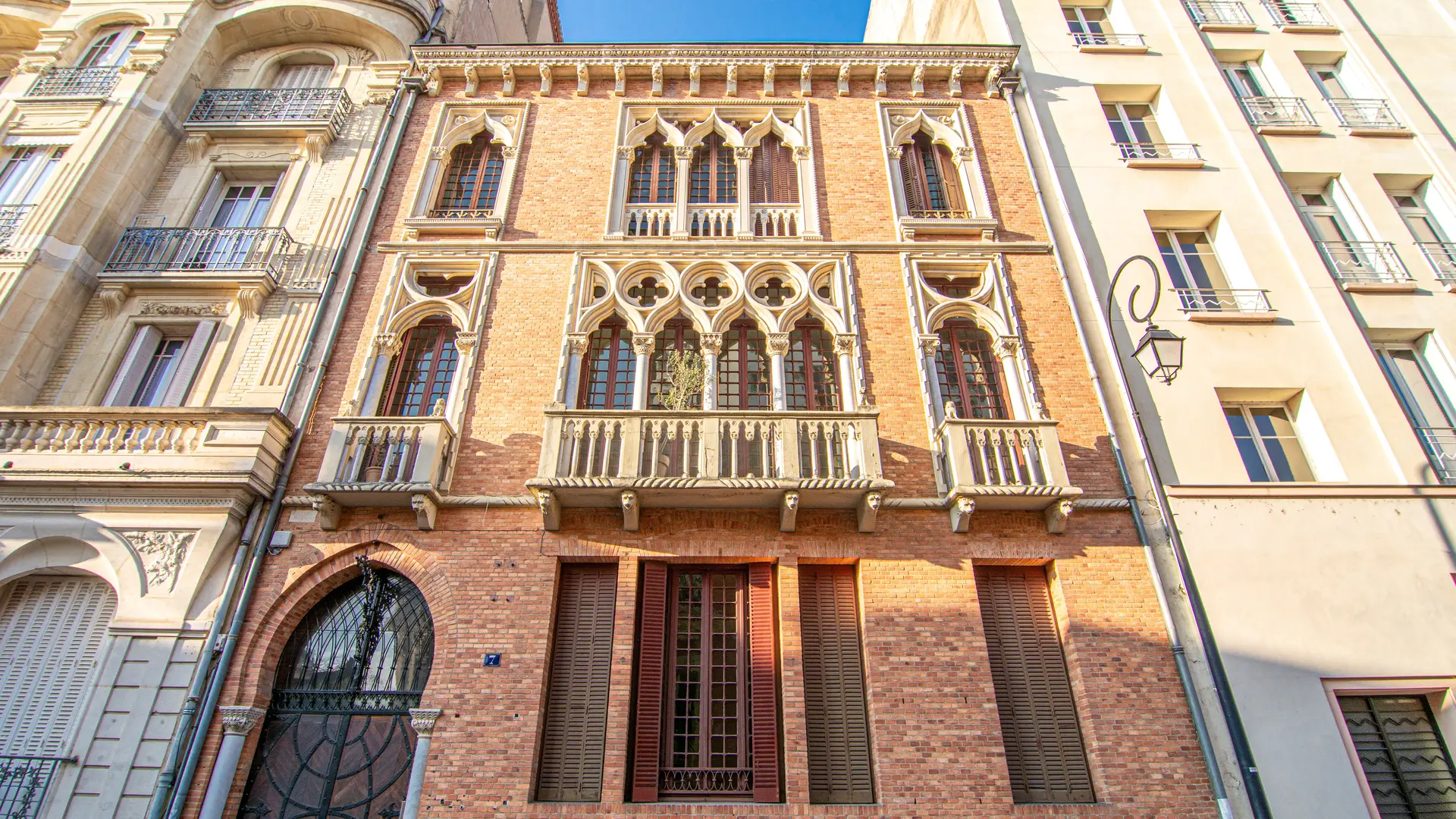
Villa Vénitienne (1897), N° 7, was commissioned from architect Henri Décoret by Jean-Baptiste Lambert, an art dealer, his profession providing the rationale for this extraordinary style. Venetian buildings were often designed to house a home and a warehouse, or even a business, which explains the remarkable ceiling height of the ground floor, which allowed its owner to display a greater number of paintings. The brick, white stone, slender columns, quatrefoil motif, and Lion de Saint-Marc are all features typical of the Gothic style Venetian buildings that inspired its design.