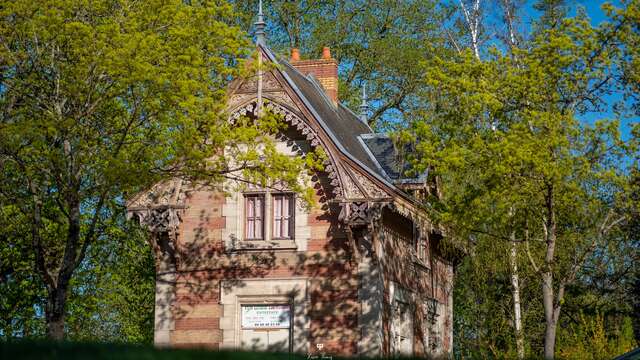
The decision to create the Allier parks dates back to 1856 and stemmed from the need to dam the river to prevent regular flooding in the city.
Although several projects were developed to extend the Parc des Sources to the river, these never came to fruition due to land speculation. In 1861, an imperial decree imposed the development of the Parc Napoléon III on the site of a side channel of the Allier river, drained by the construction of a dam. The work was led by engineer Jean-François Radoult de La Fosse, while the landscape design was entrusted to Joseph Marie, a horticulturist from Moulins.
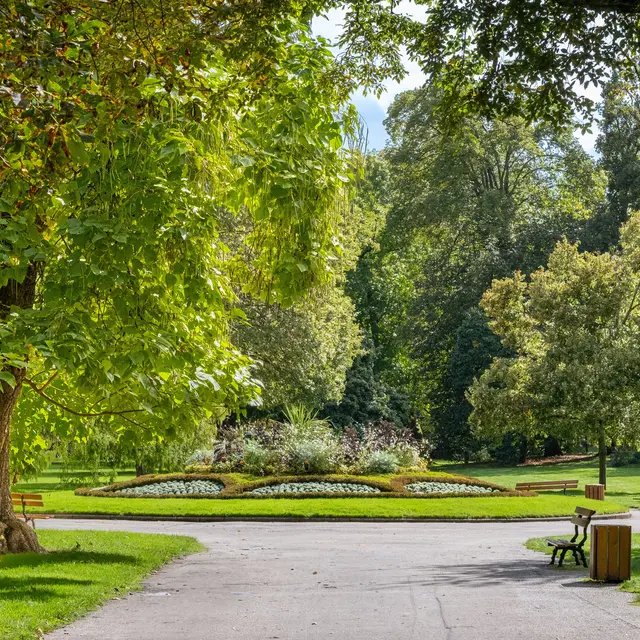
The English style parks are criss-crossed by curving paths that wind around wide lawns planted with uniform groves of trees, designed to resemble natural woodland. As the original tree plantations, chosen fully grown to immediately give the park its woodland feel, declined, rarer and more varied plant life was introduced. The park now contains just over 800 trees, an impressive collection of species from every continent. The artificial river that once flowed through the park was removed in 1867. Today, only the swan pond remains.
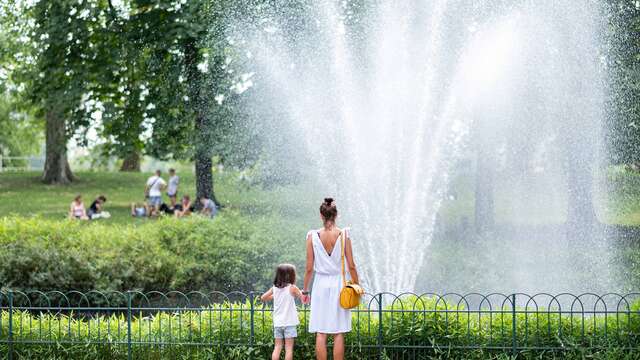
Unlike the Parc des Sources, used mainly to provide summer entertainments for spa visitors and tourists, the Parc Napoléon III, like the Parc Kennedy and the Parc des Bourins, covering a total of 21 hectares, have always been popular with families and sports enthusiasts.