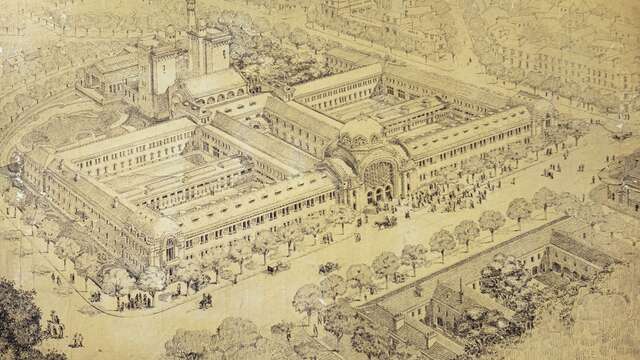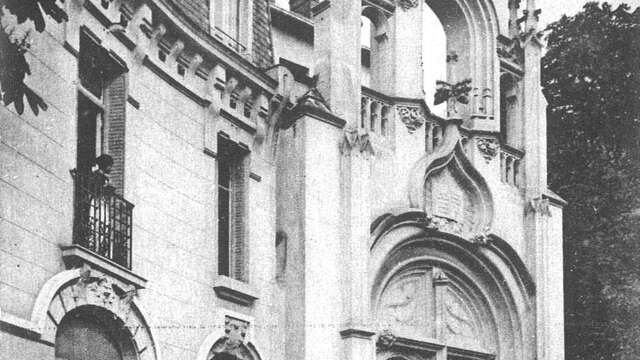



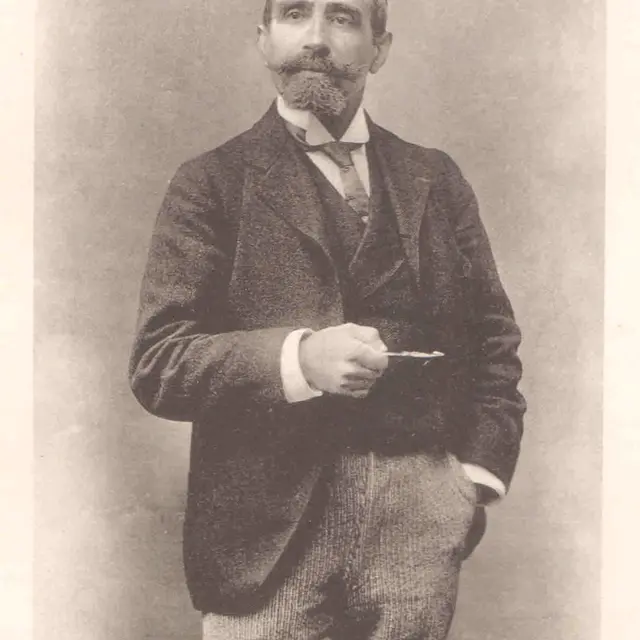
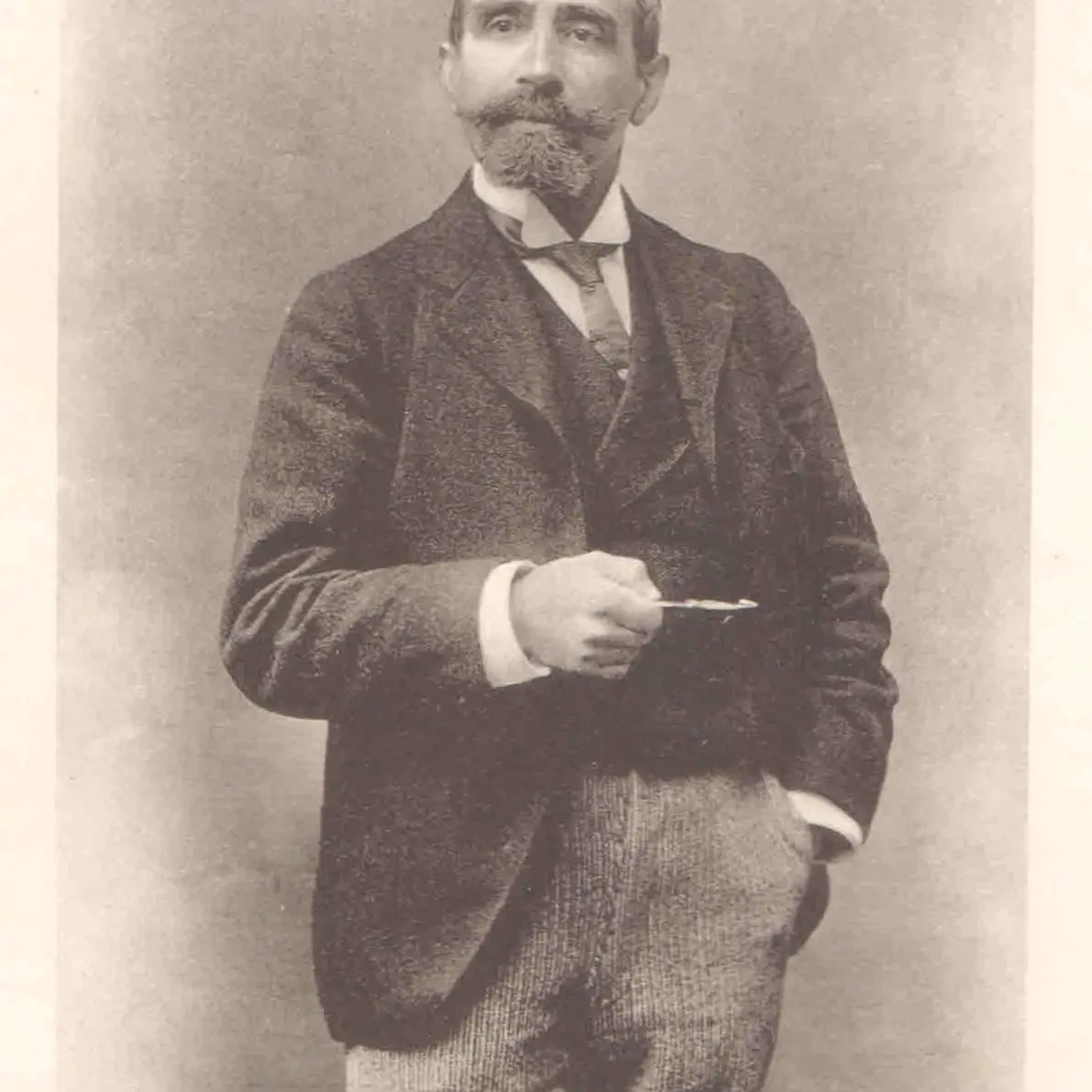
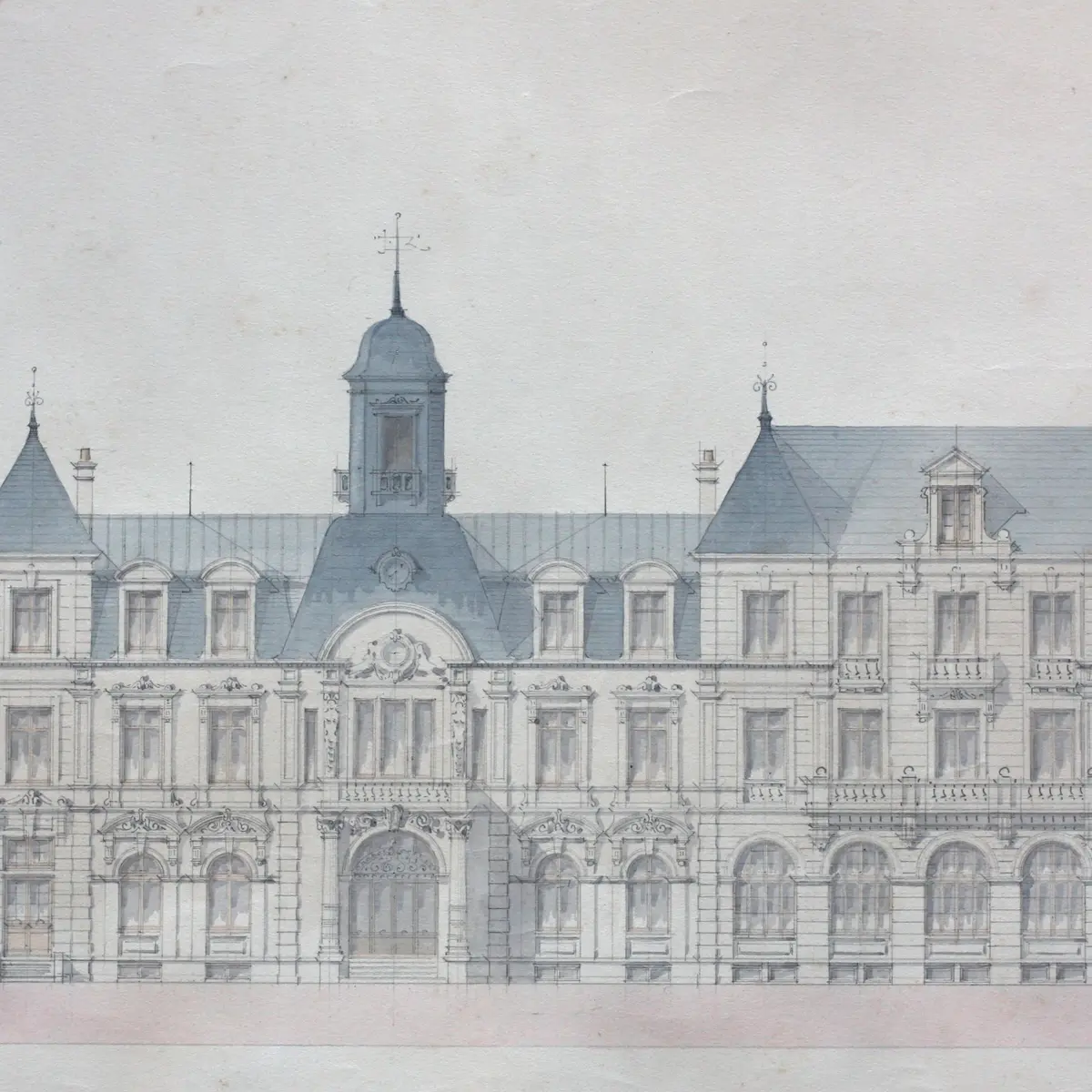
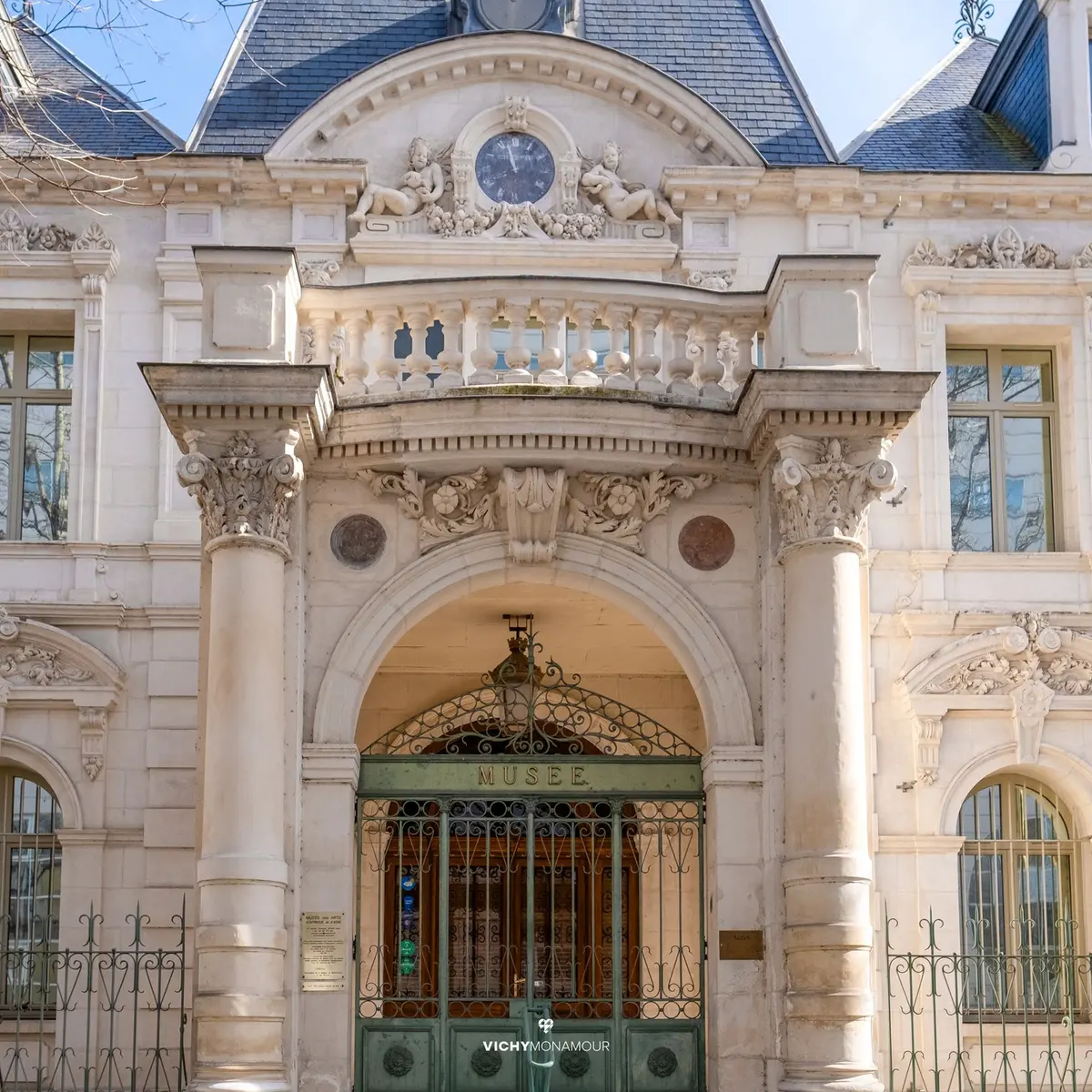
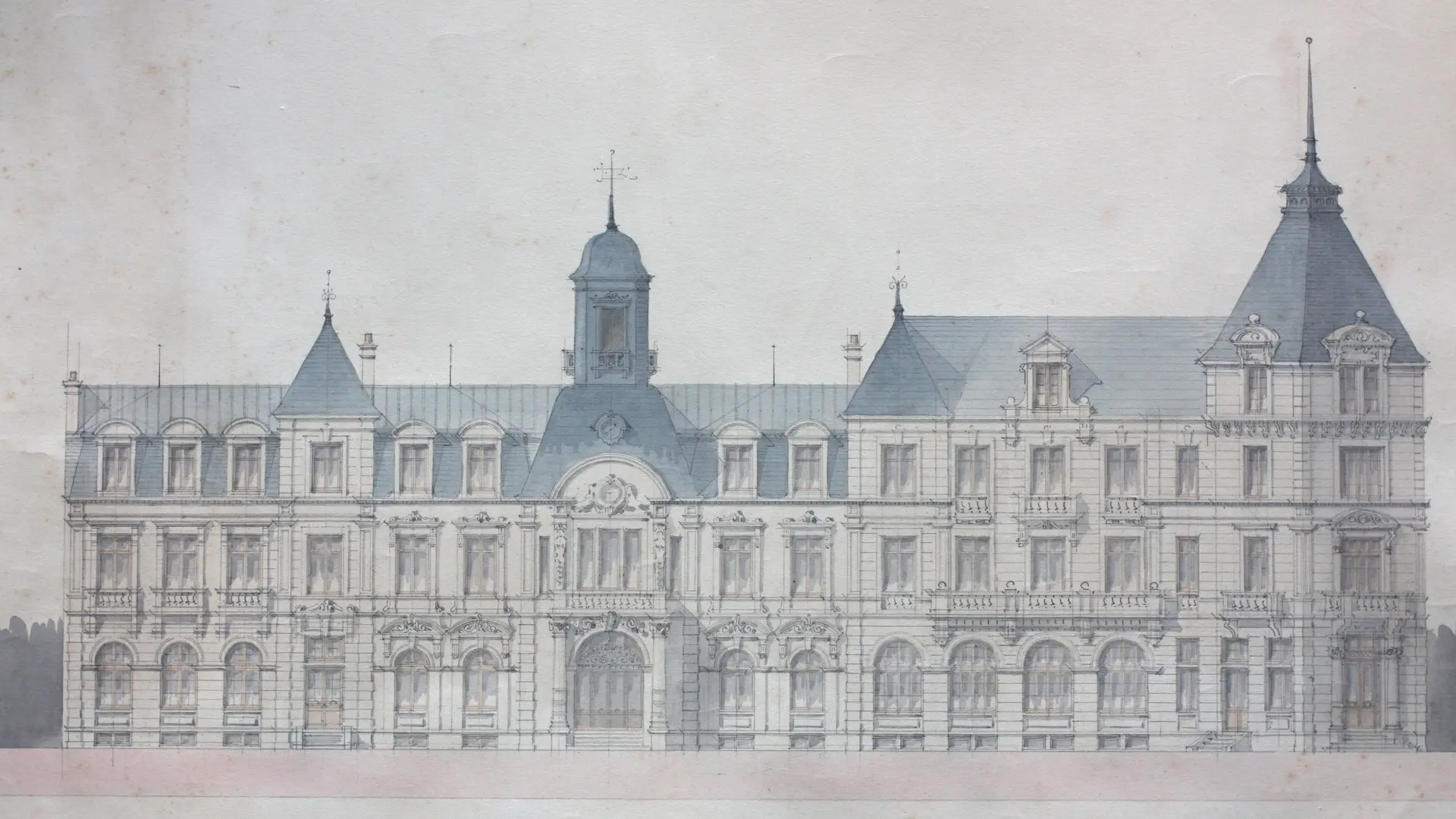
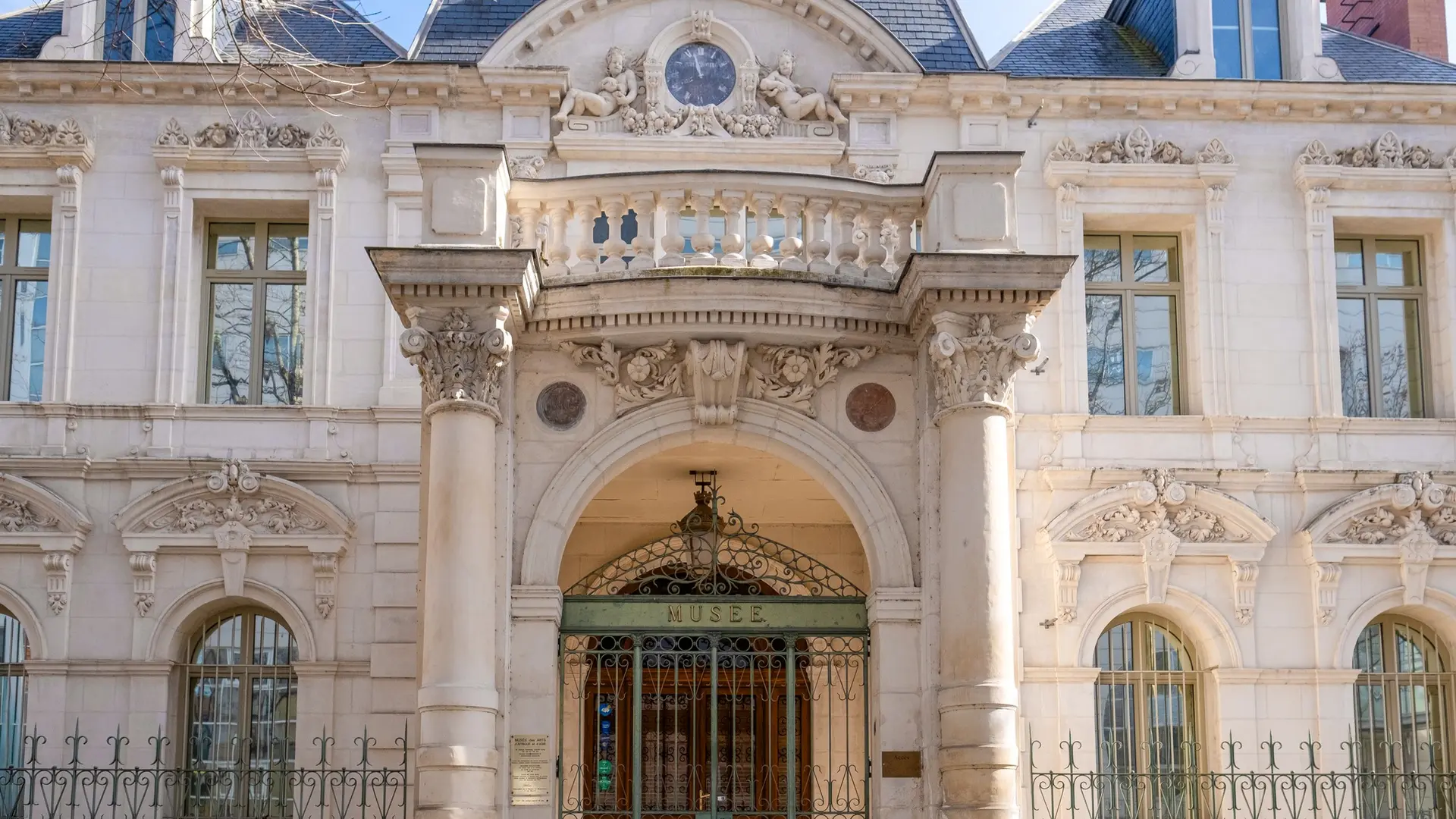
This imposing building in the style of a private hotel was built by architect Honoré Vianne in 1881 for Dr. Paul Lejeune, nephew of Dr. Antoine Jardet, who had founded a nearby establishment considered the "cradle of scientific hydrotherapy" as early as 1858.
The various treatments provided by Dr. Lejeune himself contributed to the success of his establishment. These included "hot and cold showers, raindrop showers, jet showers, flat pan showers, downward showers, upward showers, surround showers and seat baths with running water." Guests also had access to "swimming pools, armouries, medical gymnastics, massage facilities and apparatus for hanging exercises." The steeple that originally crowned the central pavilion housed a water tank; the water was cooled by ice as it descended, reaching the treatment rooms at a temperature of 7°C.
In 1899, Dr. Lejeune commissioned architect Antoine Percilly to carry out a major expansion project on the building. However, fearing competition, the Compagnie Fermière de Vichy entrusted Dr. Lejeune with the management of hydrotherapy services at the new spa complex then under construction. From then on, the building was used as a furnished villa, eventually housing the Compagnie's hydrological research lab as of 1928. Since 2002, it has housed the Musée des Arts d'Afrique et d'Asie, showcasing the collections of the Maison du Missionnaire association founded in 1923 by Père Henri Watthé.