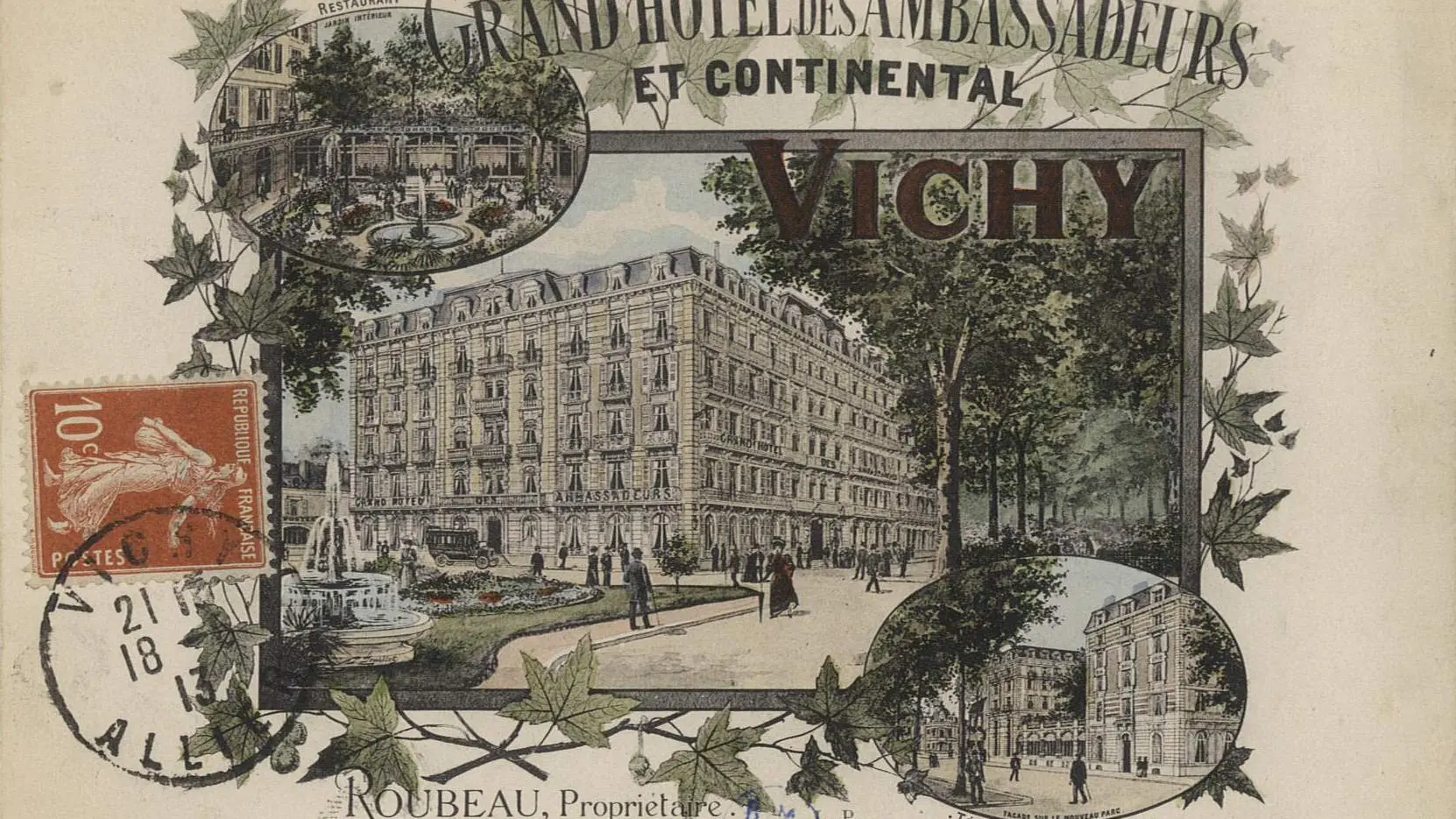
Although the Hôtel des Ambassadeurs may originally date back to 1830, it wasn't until the mid-19th century, following its purchase by Geoffroy Roubeau, that it became established as one of the most famous hotels in Vichy.
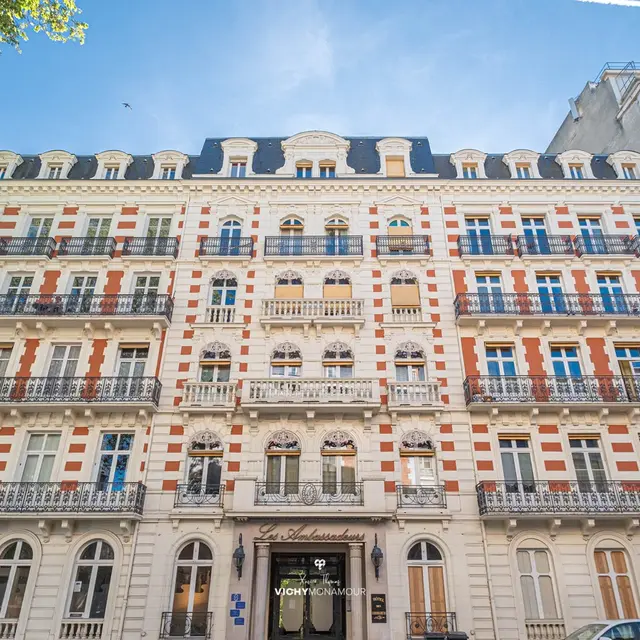
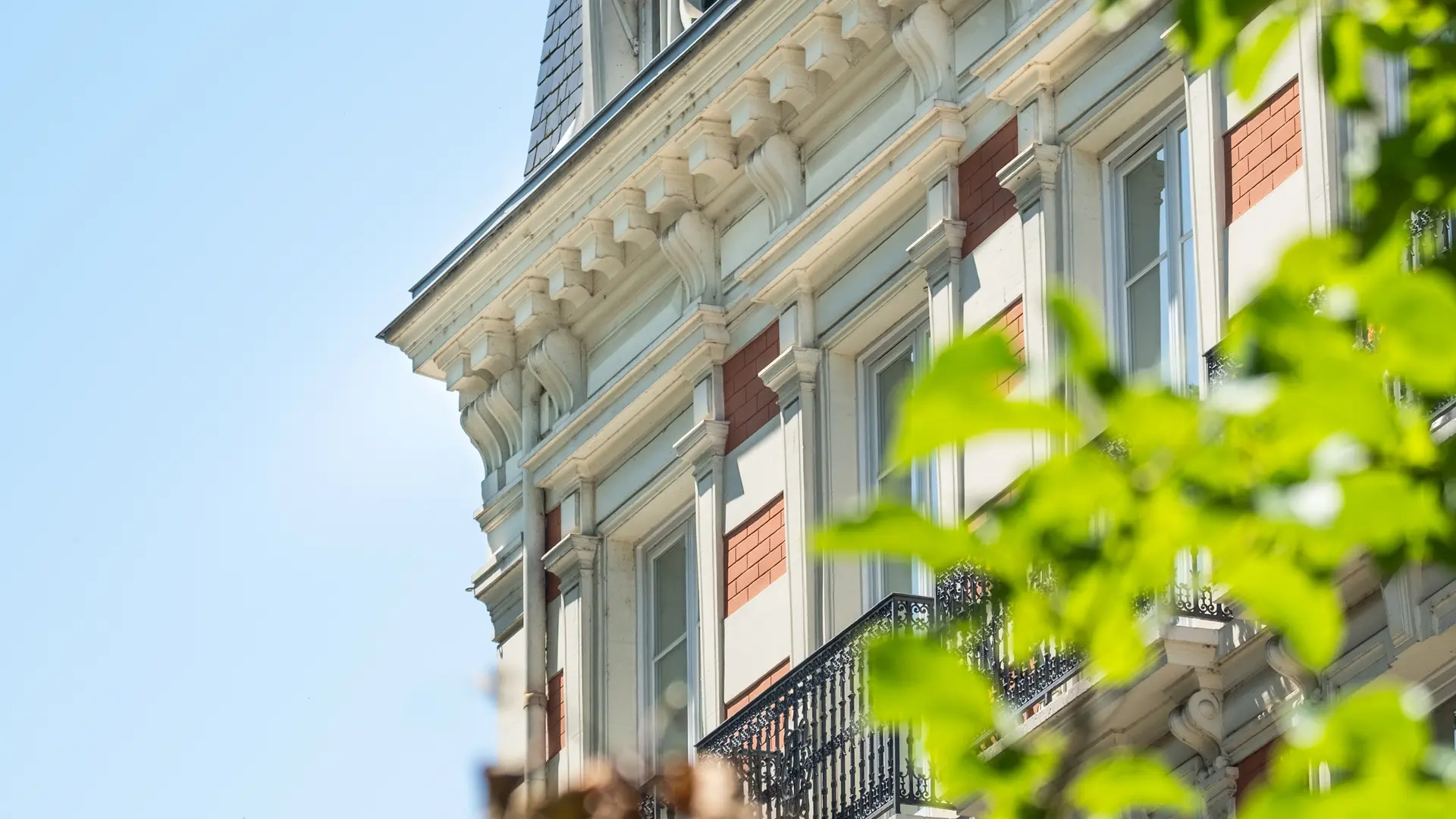
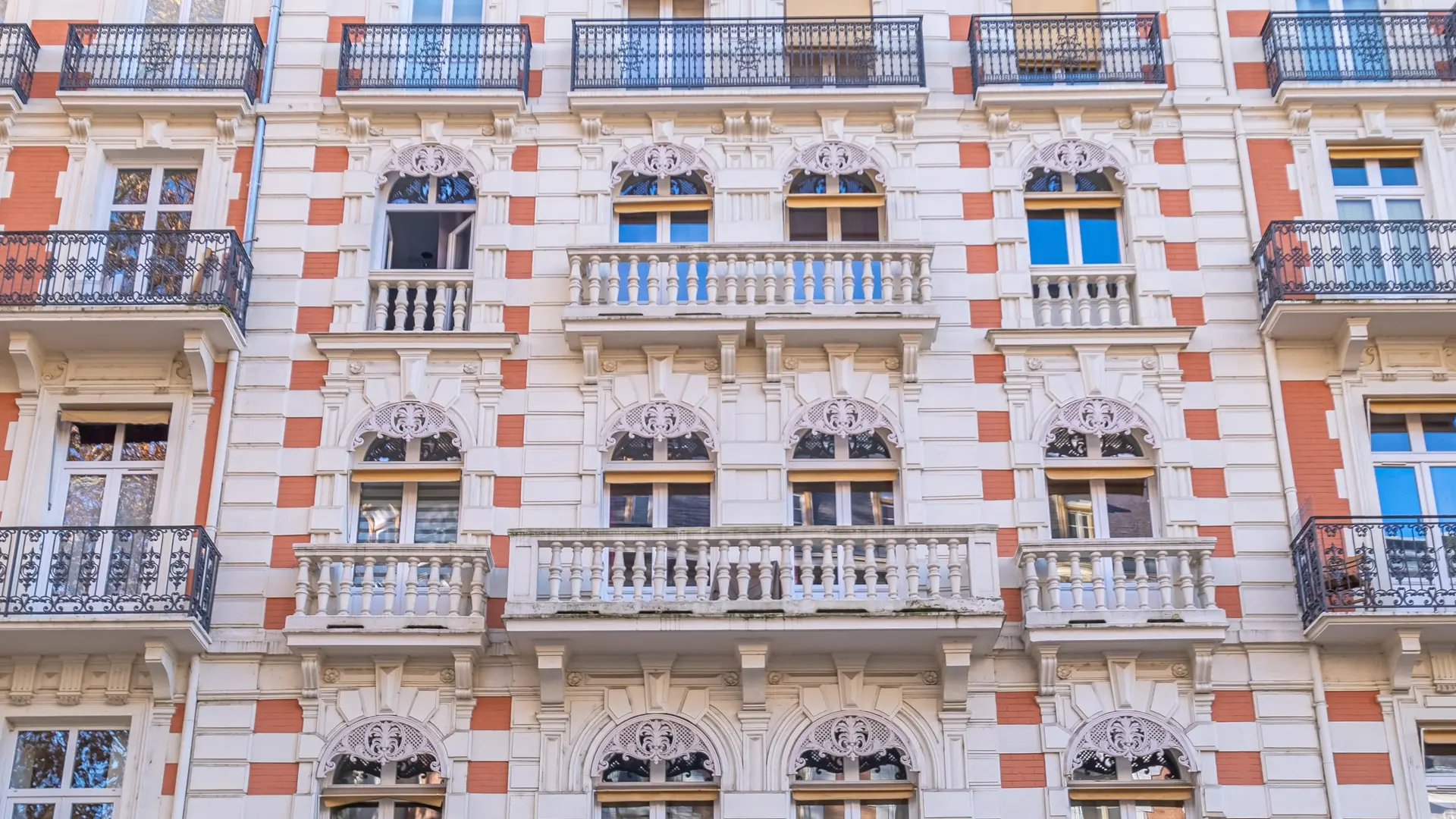
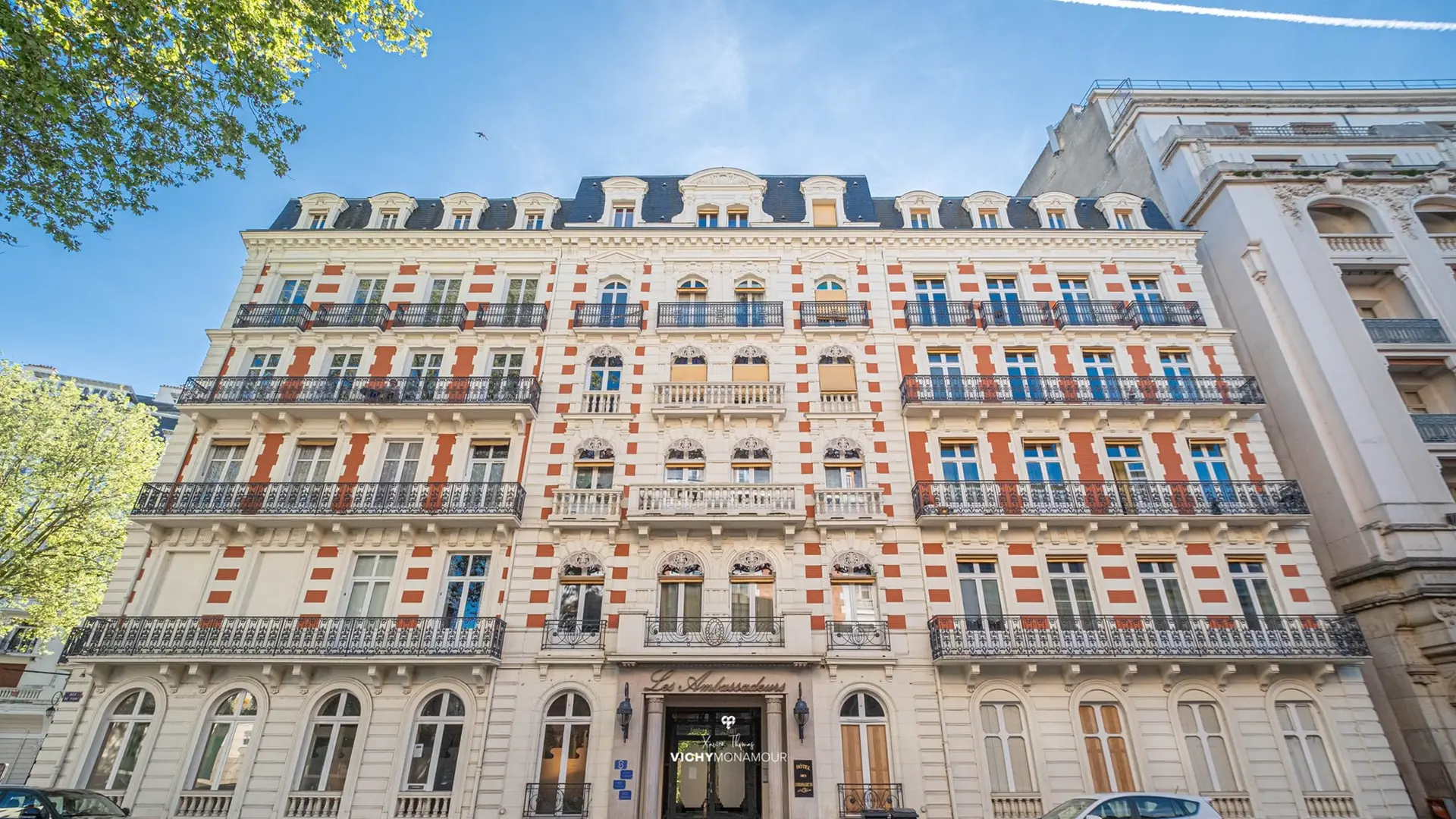
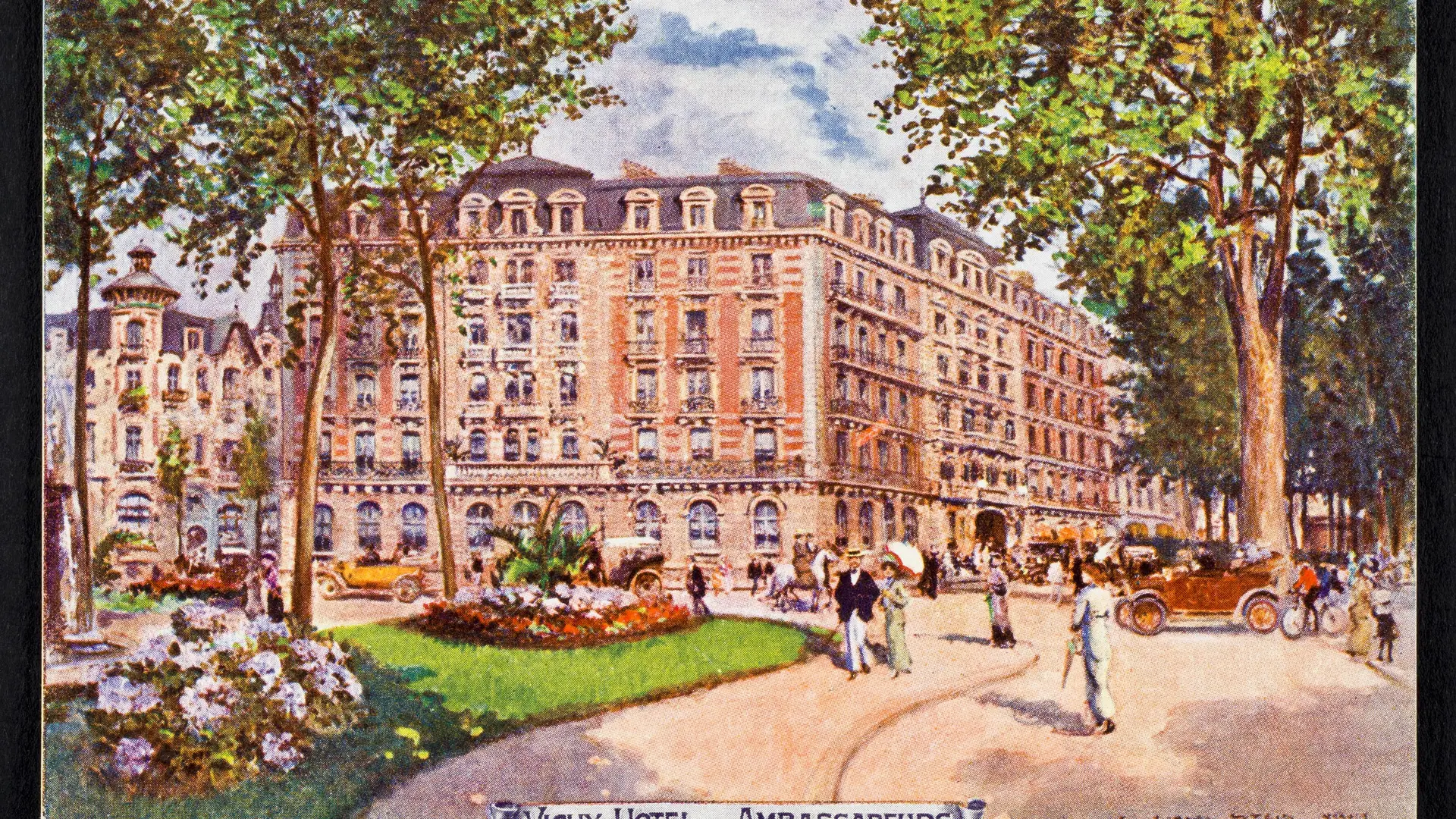
Ideally located between the two parks, facing the Casino, the imposing building is distinguished by its elegant two-tone limestone and brick exterior façade.
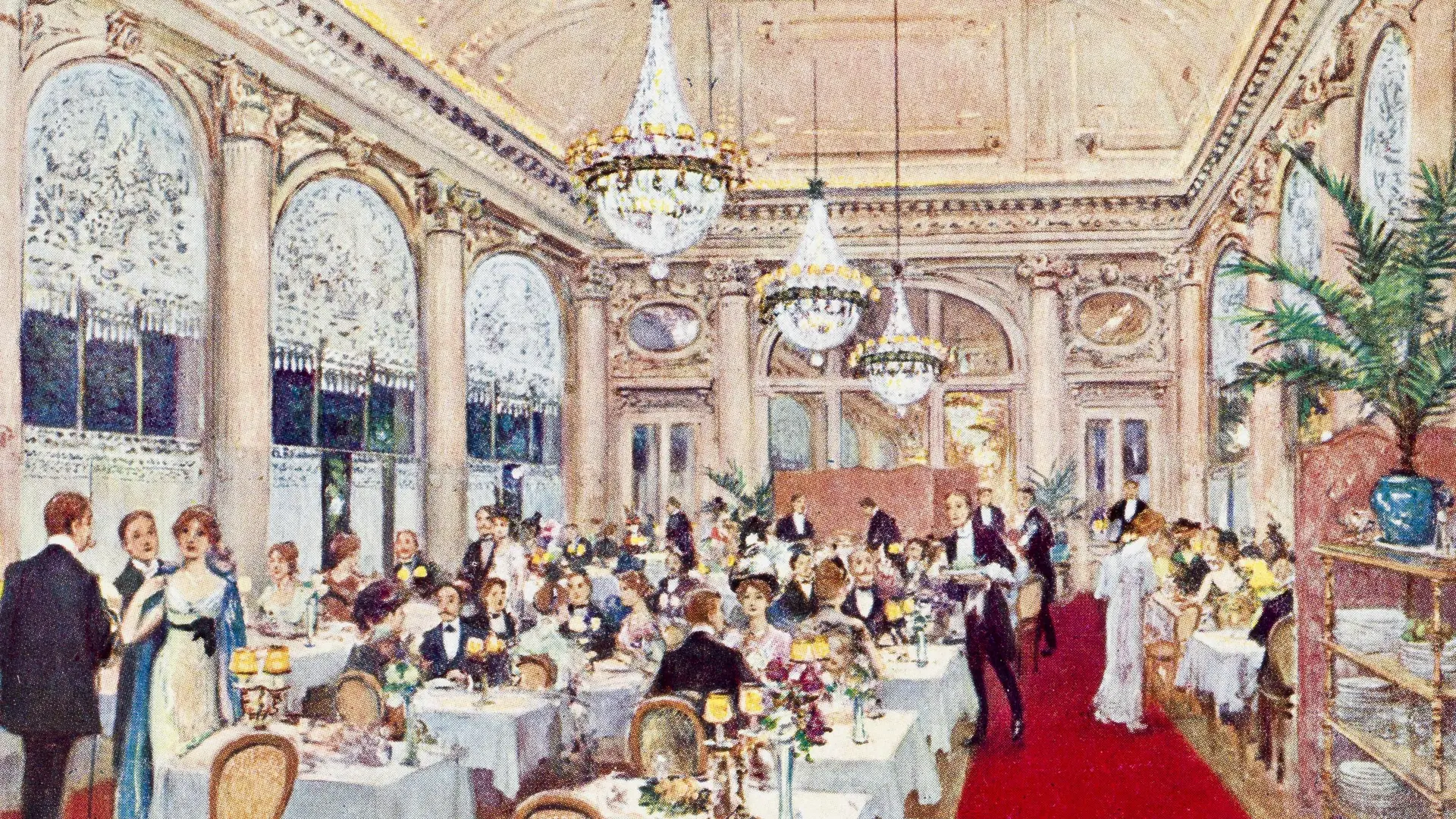
Over time, the hotel was enlarged and developed: in 1882, it boasted 200 rooms, 20 lounges, a dining room seating 200, a ballroom that could accommodate 500 people, a billiards room, a smoking room, and stables. Each year brought its share of innovations: an elevator and telephone (1890), heating (1897), additional villas (1898-1910), electric lighting and garages with vehicle inspection pits (1904).
The richly decorated reception rooms are arranged around a patio. Around 1925, the hall was redesigned in the Art Deco style, featuring decorative wrought iron, lighting, and stained glass windows designed by the master glassmaker, Francis Chigot.
Used as Temporary Hospital No. 45 during the World War I, it then housed the diplomatic corps during World War II. It was at the Hôtel des Ambassadeurs, by now a private residence, that Georges Simenon sought inspiration for his novel Maigret in Vichy in 1967, and that Roger Vadim filmed some scenes for Mon père avait raison in 1996.